In the Netherlands, there is currently no general helmet requirement for fatbikes, but the rules vary depending on the classification of your fatbike. For fatbikes considered "regular" electric bikes (e-bikes) with assistance up to 25 km/h, a helmet is not required by law but is recommended. Faster fatbikes classified as speed pedelecs or mopeds (with support up to 45 km/h) do require a helmet. The legislation specifically addresses the technical specifications of the vehicle, not the term "fatbike" itself, which refers only to the characteristic wide tires.
Free delivery in NL and BE
Tested best in the Netherlands & Belgium with 8.5 and 8.2 by Fietstest.nl, Het AD and HLN
Is there helmet requirement for fatbikes?
You'll find this in the article
- Helmet requirement for fatbikes: the current state of affairs
- What is the difference between a fatbike and a regular e-bike according to the law?
- When is a helmet mandatory when riding a fatbike?
- What helmet should you wear on a fast fatbike?
- What about helmet requirements for children on fatbikes?
- What are the fines for not wearing a helmet on a fatbike?
- Key insights on helmet requirement for fatbikes
Helmet requirement for fatbikes: the current state of affairs
The current legislation in the Netherlands makes no specific distinction for fatbikes as a separate category. Fatbikes are classified based on technical specifications. Just like other electric bikes.
"Many customers are confused about helmet requirements," says Thomas of STOER Bikes. "Our fatbikes just fall under normal e-bikes. No helmet required, just ride safely."
Key factors for helmet requirement:
- Maximum speed
- Engine Power
No helmet requirement: Fatbikes with pedal assistance up to 25 km/h and motor power of up to 250 watts. These fall under "regular" electric bikes. Helmet is however strongly recommended for safety reasons.
Helmet requirement, however: Fatbikes faster than 25 km/h with motor assistance are classified differently. If support continues up to 45 km/h, the fatbike becomes a speed pedelec. Speed pedelecs have been subject to helmet requirements since Jan. 1, 2017.
Fatbikes are becoming increasingly popular with adults. This is leading to increased attention to safety issues. Some municipalities and politicians advocate extending helmet requirements to all electric bikes. Legislation could change in the future.
Want to know more about regulations? Then read our blog "Rules and regulations regarding fatbikes, what do you need to know?“
What is the difference between a fatbike and a regular e-bike according to the law?
According to Dutch law, the main difference is not the width of tires. It is about technical specifications of the vehicle. Legally, the term "fatbike" does not exist in traffic laws.
"The law doesn't look at fat tires," Thomas explains. "It's about speed and motor power. Our fatbikes have the same specifications as regular e-bikes, so the same rules apply."
Regular e-bike (EPAC) features:
- Pedal assistance up to a maximum of 25 km/h
- Maximum motor power 250 watts
- Support works only when rider is pedaling
- No helmet requirement
- Follows the same traffic rules as regular bicycles
A fatbike with the same specifications falls into this category. Regardless of wide tires. The difference is in riding experience: fatbikes offer more stability and grip. This does not affect legal classification.
Other ratings when specs differ:
- Speed pedelec: support up to 45 km/h, maximum 4000 watts, helmet requirement
- Moped/speed bike: bike can ride without pedaling (with throttle)
Some fatbikes are sold with the possibility of "boosting. Enabling faster than 25 km/h. A souped-up fatbike then falls into another category. Other rules apply to this, including helmet requirements.
Want to know more about different species? Then read our blog "E-fatbike VS E-bike, what are the differences?“
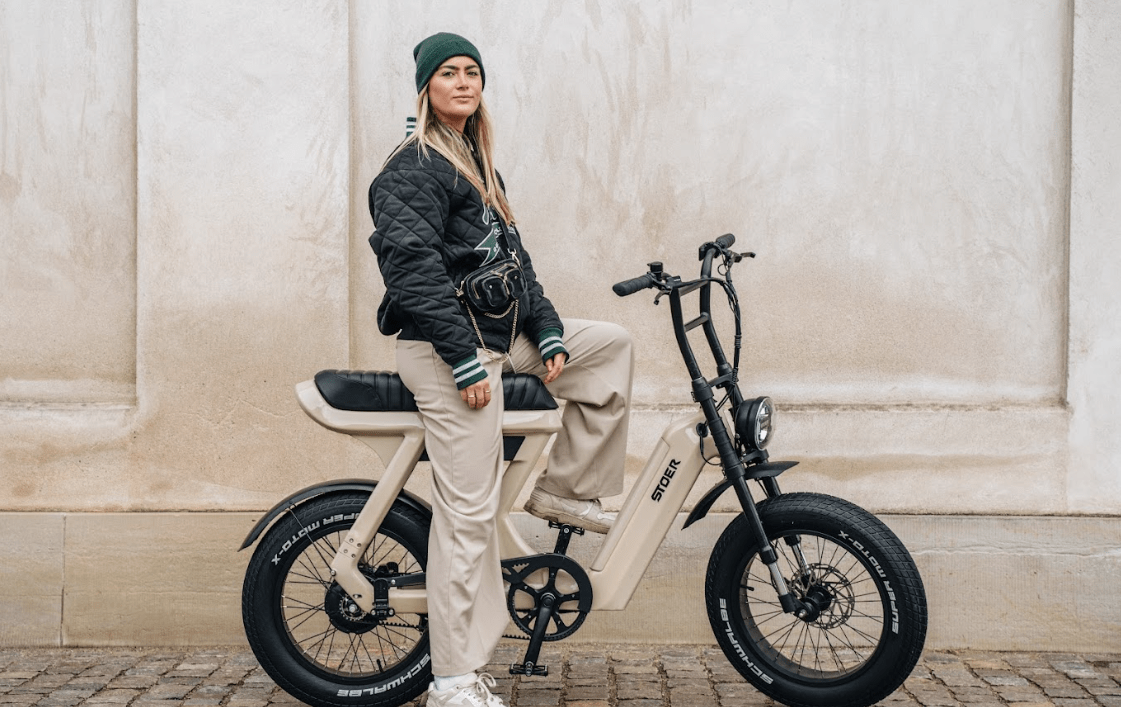
When is a helmet mandatory when riding a fatbike?
A helmet is mandatory for fatbike riding in the following situations. Pay close attention to the specifications of your fatbike.
"Almost all customers have fatbikes without helmet requirements," says Thomas. "Only if you buy really fast models or start boosting it becomes different. By the way, we advise against that."
Helmet required at:
Speed pedelec rating: Fatbike provides support up to 45 mph. Is classified as a speed pedelec. Legally required to wear approved helmet.
Moped/Moped Classification:
Fatbike has throttle that allows you to ride without pedaling. Is considered a moped or a motorized bicycle. Mopeds are subject to helmet requirements.
souped-up fatbike: Standard fatbike modified to go faster than 25 km/h. No longer falls under regular e-bike category. Helmet requirement applies.
Increased engine power: Fatbike has motor with more than 250 watts of power. Falls into other vehicle category. Helmet requirement applies.
Important to know: Belt drive instead of chain drive does not affect helmet duty. It is purely about speed and engine power.
For regular fatbikes (support up to 25 km/h, maximum 250 watts) helmets are not required by law. For safety reasons, we always recommend wearing helmets.
Local regulations may vary. Some nature reserves or private lands have their own rules for fatbikes and safety equipment.
Want to know more about security? Then read our blog "10 advantages of fatbikes for daily use in the city“
What helmet should you wear on a fast fatbike?
For fast fatbikes like speed pedelec (support up to 45 km/h), you need to wear special speed pedelec helmet. This meets NTA 8776 standard. These helmets offer more protection than regular bicycle helmets.
"Fortunately, most customers don't have this problem," Thomas explains. "Our fatbikes are just normal e-bikes. But if you do want fast models, you have to have the right helmet."
Different types of helmets by fatbike type:
| Type of fatbike | Required helmet | Features |
|---|---|---|
| Regular e-fat bike (up to 25 km/h) | No obligation, regular bicycle helmet recommended | Lightweight, good ventilation, CE mark |
| Speed pedelec fatbike (up to 45 km/h) | Speed pedelec helmet (NTA 8776) | More protection temples and back of head, often with visor |
| Fatbike classified as moped | Moped helmet (ECE 22.05 or 22.06) | Full protection, mandatory visor |
When choosing a helmet, note:
- Certification: Check helmet meets proper safety standard
- Fit: Helmet works optimally only with good fit
- Visibility: choose helmet with reflective elements for traffic
- Comfort: Comfortable helmet you are more likely to wear (weight, ventilation, adjustable straps)
No helmet is required for regular fatbikes. However, it is strongly recommended that helmets be worn at all times. Combination of higher speeds and fatbike weight can lead to more serious injuries in the event of a fall.
Want to know more about different models? Then read our blog "8 Main differences between entry-level and premium fatbikes“
"We have been riding a Stoer bicycle for a year now without any problems. Even the battery capacity has not deteriorated. And when you then see other brands where after a year the rust marks are visible I am glad I spent a little more and now have a bike made entirely of aluminum. And this one stays really neat!!!"

"Purchased a STOER Bike last year after trying several fatbikes. STOER is by far the best! Still very much enjoy my purchase. In addition, the service is top notch!"

What are the main conclusions about the weight difference between drive systems?

"The bike is perfect for people with long legs. Sitting comfort is perfect for long distances."

What about helmet requirements for children on fatbikes?
The same legal rules apply to children on fatbikes as adults. There are important considerations, however. The Netherlands has no specific helmet requirement for children on regular fatbikes.
"You don't see kids on fatbikes very often," says Thomas. "Our fatbikes are actually too heavy for kids. We target adults from about 16 years of age and up."
Safety recommendations: From a safety standpoint, it is strongly recommended that children always wear helmets. Regardless of bicycle type. Children are more vulnerable to falls. Have less experience in traffic. Good children's helmet prevents serious head injuries.
For children as passengers: For example, in child seat or on cargo bike:
- Always use appropriate bicycle helmet for children
- Make sure helmet fits properly and is fastened correctly
- Choose helmet that meets European safety standard EN 1078
- Replace helmet after fall or collision even without visible damage
Age considerations: No legal age limit for riding fatbikes. Important to remember though: fatbikes are heavier than regular bikes. Require more strength to maneuver. Manufacturers therefore usually target adults or teens 16 and older.
For younger children, it is better to choose specially designed children's bikes. These fit their height and weight. If child does ride fatbike, extra important for proper protective equipment. At least good helmet.
Want to know more about eligibility? Then read our blog "Fatbike for tall people: the right size for optimal riding comfort“

What are the fines for not wearing a helmet on a fatbike?
Fines for not wearing helmet depend on classification of vehicle. Overview of possible fines by situation.
"Fortunately, our customers rarely get fined," Thomas explains. "Our fatbikes fall under regular e-bikes. No helmet requirement, so no fines. Only if you start boosting it becomes different."
Fines by fatbike type:
- Regular e-fat bike (up to 25 km/h): No fine, no helmet requirement
- Speed pedelec fatbike (up to 45 km/h): €110 for not wearing approved helmet
- Fat bike classified as moped: €110 for not wearing helmet
Other possible consequences:
- souped-up fatbike: fine €280 or more if caught
- Insurance issues: In accident, failure to wear helmet may affect coverage
- Impoundment: For repeated violations or significantly souped-up fatbikes
Key points of interest: Fine amounts may be adjusted annually. Additional charges such as administrative fees are in addition to fine amount.
In addition to financial consequences, there is an increased risk of head injury in an accident without a helmet. This risk far outweighs any fines.
Want to know more about legislation? Then read our blog "Fatbike law changes 2025: what do you need to know?“
Key insights on helmet requirement for fatbikes
After going through all the information on helmet duty, we can summarize key points for clarity.
"The most important thing is that customers know where they stand," says Thomas. "Our fatbikes are safe and legal. No hassle with helmets and fines. Just ride safely and enjoy."
Key points summarized:
- Regular fatbikes (support up to 25 km/h, 250 watts): no legal helmet requirement, but strongly recommended
- Faster fatbikes (speed pedelecs up to 45 km/h): approved speed pedelec helmet required (NTA 8776 standard)
- Classification determined by technical specifications (speed, engine power), not wide tires
- For children, same legal rules apply, from safety always helmet recommended
- Fines for not wearing helmet (if mandatory) can reach €110 or more
Our recommendations: Regardless of legal obligations, wearing helmet is always wise choice. With electric fatbike, you can reach higher speeds. Heavier construction can lead to more impact when falling.
As responsible fatbike riders, we recommend:
- Always wear properly fitting helmet regardless of legal requirement
- Know technical specifications of fatbike and understand legal category
- Fatbike not boosted (illegal and dangerous)
- Being extra careful in traffic at higher speeds
- Regularly check helmet for damage, replace after fall
By following these guidelines, you will safely enjoy all the benefits of a fatbike. You significantly reduce your risk of serious injury in the event of an accident.
Want to know more about safe fatbike riding? Then read our blog "8 cycling routes to explore with your electric fatbike“


