Free delivery in NL and BE
Tested best in the Netherlands & Belgium with 8.5 and 8.2 by Fietstest.nl, Het AD and HLN

Zero-emission zone cargo bike: the smart choice for business owners

A zero-emission zone cargo bike is the smart solution for more and more business owners to keep access to inner cities. Since Jan. 1, 2025, eighteen Dutch municipalities have introduced zero-emission zones. This means that vans and trucks running on diesel or gasoline are no longer welcome in these areas. For business owners who work in the city on a daily basis, this can have significant consequences. Fortunately, there is an alternative that not only complies with all the rules, but also saves money: the electric cargo bike.

In this article you can read all about zero-emission zones, which municipalities are participating and why an electric cargo bike like the STOER CargoX is the ideal alternative for your business.

What exactly is a zero-emission zone?

A zero-emission zone is a defined area in a city where only vehicles that do not emit pollutants are allowed to operate. Think electric vehicles, hydrogen-powered vehicles or electric cargo bikes. The goal of these zones is simple: cleaner air and fewer CO2 emissions in busy city centers.

The zero-emission zone differs from an environmental zone. With an environmental zone, only the most polluting vehicles are barred. With a zero-emission zone, things go a step further. Only vehicles that produce no emissions at all will eventually be allowed to drive here. The rules apply to van and truck traffic, not to passenger cars. Are you a plumber, florist or delivery driver? Then you will have to deal with this directly.

Who do the rules apply to?

The zero-emission zone applies to business vans and trucks. This means that package deliverers, installers, caterers and other business owners who need to drive a van into town must comply with the rules. Do you drive a van with emission class lower than Euro 5? Then you are no longer allowed to enter the zone without an exemption.

New vans registered after Jan. 1, 2025, must be completely emission-free to gain access. Older vehicles are subject to a transitional arrangement until 2030 at the latest. From then on, all urban logistics in zero-emission zones must be fully emission-free.

Want to know more about our business solutions? Then check out our CargoX electric cargo bike

CargoX Desert Sand

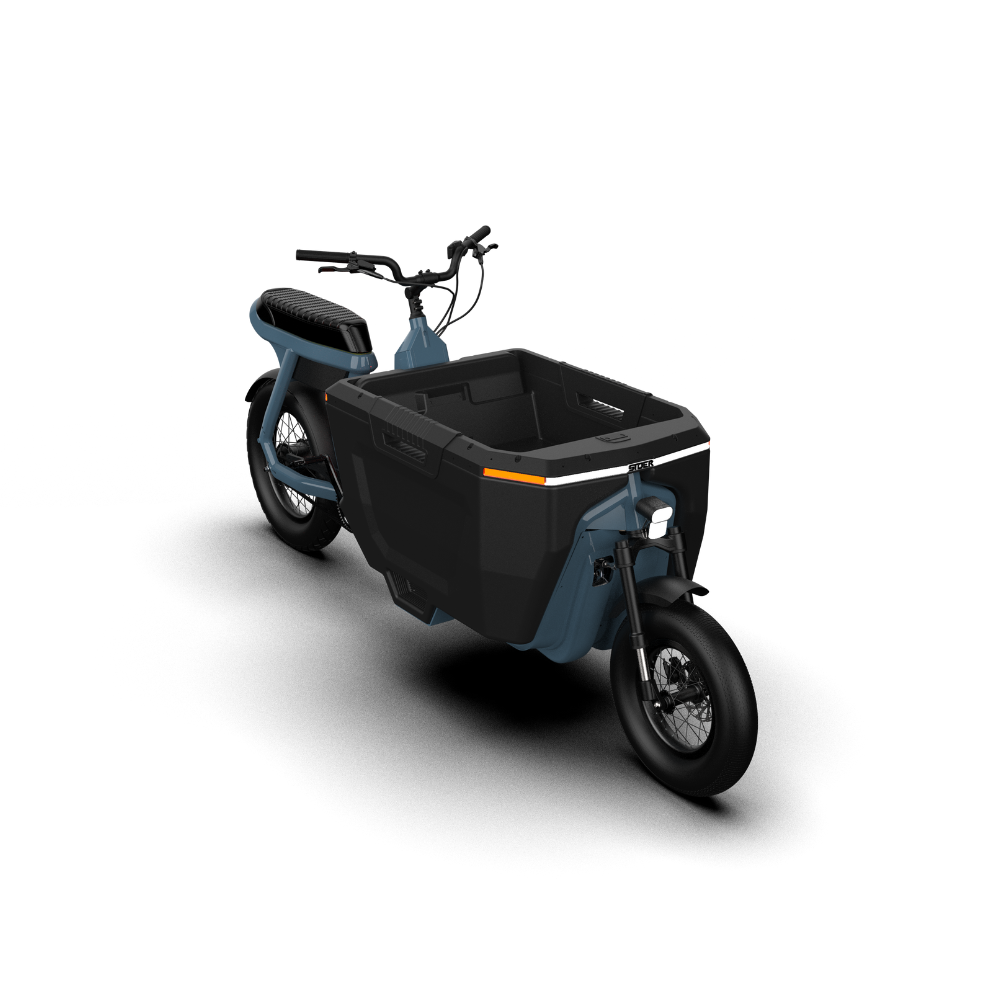
The STOER CargoX: the SUV among cargo bikes. Safe, robust, powerful and the most complete family cargo bike.

CargoX Nardo Grey

The STOER CargoX: the SUV among cargo bikes. Safe, robust, powerful and the most complete family cargo bike.

CargoX Forrest Green

The STOER CargoX: the SUV among cargo bikes. Safe, robust, powerful and the most complete family cargo bike.

CargoX Denim Blue

The STOER CargoX: the SUV among cargo bikes. Safe, robust, powerful and the most complete family cargo bike.

Which cities will have zero-emission zones in 2025 and 2026?

The number of municipalities with zero-emission zones is growing rapidly. As of January 1, 2025, the first eighteen municipalities have started. More will follow during 2025 and 2026. Below is an overview of the main cities and their start dates.

Cities with zero-emission zones by Jan. 1, 2025

The following 14 municipalities were the first to start their zero-emission zones: Amsterdam, Rotterdam, The Hague, Utrecht, Eindhoven, Tilburg, Groningen, Leiden, Maastricht, Nijmegen, Amersfoort, Assen, Delft, Gouda and Zwolle. Den Bosch followed in March 2025, Groningen (expansion) in April and Haarlem in June.

Zero-emission zones starting in 2026 and later

Following in 2026 are Dordrecht, Haarlemmermeer (Schiphol) by January 1, Arnhem by June 1 and Alphen aan den Rijn plus Enschede by July 1. Venlo will start in 2027. Deventer follows at the end of 2027. Almere will start in 2028. Ede and Zaanstad will close the line in 2030. In total, some 29 municipalities have plans for a zero-emission zone.

Do you live or work in one of these cities? Then it's smart to start thinking about alternatives now. A zero-emission zone cargo bike offers a solution for business owners who want to remain flexible.

Wondering about a dealer near you? Check our dealer network.

Why an electric cargo bike is the ideal solution

By definition, an electric cargo bike is a zero-emission vehicle. You don't emit CO2 or particulate matter, which means you can access any zero-emission zone anytime, anywhere. But there are more reasons why more and more business owners are choosing a cargo bike over an electric van.

Faster through the city

In busy city centers, a cargo bike is often faster than a van. You ride through narrow streets, take shorter routes and are never stuck in traffic. Research shows that delivery drivers on a cargo bike are up to 60 percent faster than colleagues in a van. On average, you deliver one-third more packages per hour.

Substantially lower costs

The purchase cost of an electric cargo bike is considerably less than that of an electric van. Add to that the savings on fuel, maintenance, insurance and parking costs. A cargo bike costs an average of 150 to 400 euros per year in maintenance. Compare that to a van. The annual maintenance costs of an average electric cargo bike are up to 30 percent lower than those of a van.

No parking hassles

Downtown parking is expensive and often hard to find. With a cargo bike you can park anywhere for free and be at your customer's door in seconds. No searching for a spot, no parking meter and no fines.

Want to take a test drive? Then schedule a test drive at one of our dealers.

The STOER CargoX: built for business use

Not every cargo bike is suitable for business use. You need a bike that can take a beating, has plenty of cargo capacity and is reliable. The STOER CargoX is specially designed for entrepreneurs who need to hit the road every day.

150 kg load capacity and spacious bin

The CargoX has a load capacity of 150 kilograms. The bin measures 100 by 70 centimeters and provides space for tools, flowers, packages or other items. Thanks to the EPP bin, the CargoX is light, sturdy and fully recyclable. Whether you are a plumber, florist or package deliverer, there is plenty of room for your cargo.

Powerful motor for heavy loads

With 92 Nm of torque from the Bafang motor, you pedal away effortlessly, even with a full cargo box. Most cargo bikes have between 65 and 85 Nm of torque. The CargoX is well above that. Thanks to the automatic 2-speed gearing, you shift smoothly and don't have to think about the right gear.

Range up to 100 kilometers

The 960Wh battery gives you a range of 60 to 100 kilometers, depending on your riding style and load. That's more than enough for a full working day in the city. And if you do run out of power? The battery can be fully charged in 4 to 6 hours.

"We are seeing more and more business owners using the CargoX for delivery and service rides downtown. With 150 kg payload and access to every street, it's a logical choice for those who want to do smart business," said Thomas, co-founder of STOER Bikes.

View all specifications of the CargoX.

Safety and security of the CargoX

A business bike should not only be practical, but also safe. The CargoX is equipped with everything you need to move safely through traffic and protect your bike from theft.

Indicators and daytime running lights

The CargoX has integrated turn signals in the body and on the sides, just like a car. This way, other road users know exactly which way you are going. The LED daytime running lights provide extra visibility, even during the day. The brake lights turn on automatically as soon as you brake.

GPS tracking and PIN code

By default, the CargoX is equipped with GPS tracking. You always know where your bike is, even if it is unexpectedly stolen. The PIN code immobilizer ensures that the bike will only start with the correct code. This greatly reduces the risk of theft. Do you want extra security? Check out the GPS tracker Tracefy Pro.

Fatbike tires for extra stability

The thick fatbike tires of 20×4 inches at the rear and 16×4 inches at the front give extra stability, even with a full tank. A big advantage: these tires don't get stuck in streetcar rails. In cities like Amsterdam and Rotterdam with lots of streetcar tracks, this is an important safety feature. The wide tires also provide a comfortable ride over cobblestones and bumpy roads.

Want to know more about securing your STOER bike? Read more about our bicycle insurance.

"We have been riding a Stoer bicycle for a year now without any problems. Even the battery capacity has not deteriorated. And when you then see other brands where after a year the rust marks are visible I am glad I spent a little more and now have a bike made entirely of aluminum. And this one stays really neat!!!"
What are the main conclusions about the weight difference between drive systems?
"Purchased a STOER Bike last year after trying several fatbikes. STOER is by far the best! Still very much enjoy my purchase. In addition, the service is top notch!"
"The bike is perfect for people with long legs. Sitting comfort is perfect for long distances."

Tax advantages for entrepreneurs

The government encourages the switch to emission-free transportation with attractive subsidies and tax schemes. As an entrepreneur, you can save substantially on the purchase of an electric cargo bike.

MIA: environmental investment deduction

The MIA scheme allows you to deduct 45 percent of the purchase price of your electric cargo bike from your taxable profit. This immediately reduces your tax burden. The cargo bike must meet the requirements on the Environment List. The STOER CargoX meets these requirements.

VAMIL: accelerated depreciation

With VAMIL, you write off your investment at an accelerated rate. In the first year you may write off 75 percent, the following year the remaining 25 percent. This gives you a liquidity advantage by giving you an earlier tax break.

KIA: small-scale investment deduction

The KIA scheme applies to investments in business assets, including the electric cargo bike. Depending on your total investment amount, you can deduct up to an additional 28 percent from your taxable profit. Do you combine MIA, VAMIL and KIA? Then the savings can amount to thousands of euros.

More information on these schemes can be found on the website of the RFO.

Zero-emission zone cargo bike: practical examples

More and more business owners are discovering the benefits of an electric cargo bike in zero-emission zones. Here are a few examples of how to use the cargo bike for business.

Parcel delivery and last-mile delivery

Large logistics companies such as PostNL and DHL are already using cargo bikes for the last miles of the delivery route. The cargo bike is faster, cheaper and always welcome in any zone. For smaller delivery services, the CargoX with 150 kg payload offers more than enough capacity for a day's delivery.

Installers and service technicians

Plumbers, electricians and other service technicians often need no more than a bag with tools and some parts. The CargoX's spacious bin provides plenty of room. With the box cover protect your belongings from rain and prying eyes.

Florists and caterers

Fresh flowers or catering delivery downtown? A cargo bike gets you everywhere. You drive right up to your front door and are not bothered by parking bans or narrow streets. The CargoX has room for several bouquets or catering boxes.

Want to expand the CargoX with accessories? Then take a look at our accessory range.

Zero-emission zone cargo bike: the smart choice for business owners

Transitional arrangements and waivers

Not everyone can switch to electric transportation overnight. That is why the government has established a transitional arrangement for existing vehicles.

Transitional arrangement for vans

Vans with emission class Euro 5 registered before 2025 may enter zero-emission zones until January 1, 2027. Vehicles with emission class Euro 6 have access until the end of 2027. After that, you must switch to a zero-emission vehicle or an alternative such as an electric cargo bike.

Requesting exemptions

In some cases, you can apply for a waiver. This is possible if your new electric van has a long delivery time. From 2026, an exemption is also possible if you cannot charge your vehicle due to a full power grid. You can apply for exemptions via the RDW. Please note that treatment may take up to eight weeks.

Fines for violation

Do you drive into a zero-emission zone without permission? Then you risk a fine of at least 120 euros for vans and 310 euros for trucks. Municipalities enforce more and more strictly with cameras and boas. So it pays to switch in time.

Want to know more about zero-emission zones? Check out the official information at On the road to SIX.

Comparison: electric cargo bike vs electric van


Are you hesitating between an electric cargo bike and an electric van? Below we list the main differences.

FeatureElectric cargo bike (CargoX)Electric delivery van
Purchase PriceFrom €6,495Starting at €35,000
Annual maintenance€150 - €400€800 - €1.500
Fuel costsVirtually nil€500 - €1,500 per year
Parking feesFree€500 - €3,000 per year
Payload150 kg500 - 1,000 kg
Range60 - 100 km150 - 300 km
Zero-emission zone accessAlwaysAlways
Speed in the cityOften fasterOften slower due to traffic

For business owners with limited carrying capacity and short trips around town, the electric cargo bike is often the smarter choice. You save substantially on costs and are more flexible.

The CargoX has won the German Design Award 2025

The STOER CargoX is not just another cargo bike. In 2025, the CargoX won the German Design Award in the category Excellent Product Design - Bicycles and E-Bikes. This international recognition by the German Design Council confirms that the CargoX is an innovative piece of Dutch design that is shaping the future of urban mobility.

STOER Bikes was founded by brothers Thomas and Joeri in Aalsmeer in 2022. Their mission: to build bikes with character that are technically reliable and visually striking. The CargoX is proof of that.

See all of STOER's bikes on our bicycle page.

Here's how to switch to a zero-emission zone cargo bike

Ready to make the switch? The steps below will help you quickly and simply take the first step toward emissions-free business.

Step 1: determine your needs

On average, how many pounds do you need to transport? How many kilometers do you travel per day? And in which cities do you work? Answering these questions will help you determine if a cargo bike is right for you.

Step 2: schedule a test drive

A cargo bike rides differently than a regular bike. Plan a test ride at a dealer near you and experience for yourself how the CargoX drives with a full tank.

Step 3: check grants

Check with your bookkeeper or accountant to see what tax schemes you qualify for. Combine MIA, VAMIL and KIA for maximum savings.

Step 4: order your cargo bike

Choose your model and accessories. The CargoX is available with various options such as a rain hood, extra bench or box cover. See all options in our webshop.

Frequently asked questions about zero-emission zones and cargo bikes

Can I always enter the zero-emission zone with an electric cargo bike?

Yes. An electric cargo bike is a zero-emission vehicle and may operate in any zero-emission zone at any time. No restrictions apply.

Which vehicles are subject to zero-emission zone rules?

The rules apply to business vans and trucks. Passenger cars are not covered, except in specific environmental zones in cities such as Amsterdam and The Hague.

How much can I save with an electric cargo bike?

The savings depend on your current situation. On average, you will save between 3,000 and 8,000 euros per year on fuel, maintenance, parking costs and insurance compared to a van.

What subsidies are there for a business cargo bike?

You can take advantage of the MIA (45% deduction), VAMIL (accelerated depreciation) and KIA (up to 28% additional deduction). Combine these schemes for maximum savings.

How much payload does the STOER CargoX have?

The CargoX has a load capacity of 150 kg. The bin measures 100 by 70 centimeters and provides space for various types of cargo.

How far will I get with the CargoX on a full battery?

The 960Wh battery will take you 60 to 100 kilometers, depending on your riding style, load and terrain.

Is the CargoX suitable for package delivery?

Sure. With 150 kg payload, GPS tracking and a spacious body, the CargoX is ideal for last-mile delivery and package delivery in inner cities.

When should my van be fully emission-free?

From 2030, all urban logistics in zero-emission zones must be completely emission-free. Until then, transitional regulations apply to vehicles with emission classes Euro 5 and Euro 6.