Free delivery in NL and BE
Tested best in the Netherlands & Belgium with 8.5 and 8.2 by Fietstest.nl, Het AD and HLN

How do you use an electric fatbike as a signboard for your sustainable business values?

An electric fatbike is more than just a means of transportation - it is a powerful statement about your corporate values. By choosing sustainable mobility with a electric fatbike with belt drive show that your company is progressive, environmentally conscious and innovative. These bikes not only offer practical benefits such as reduced maintenance and transportation costs, but also contribute to a positive corporate image and help achieve sustainability goals. In addition, tax benefits and subsidy opportunities make the investment financially attractive.


What makes an electric fatbike a sustainable business calling card?

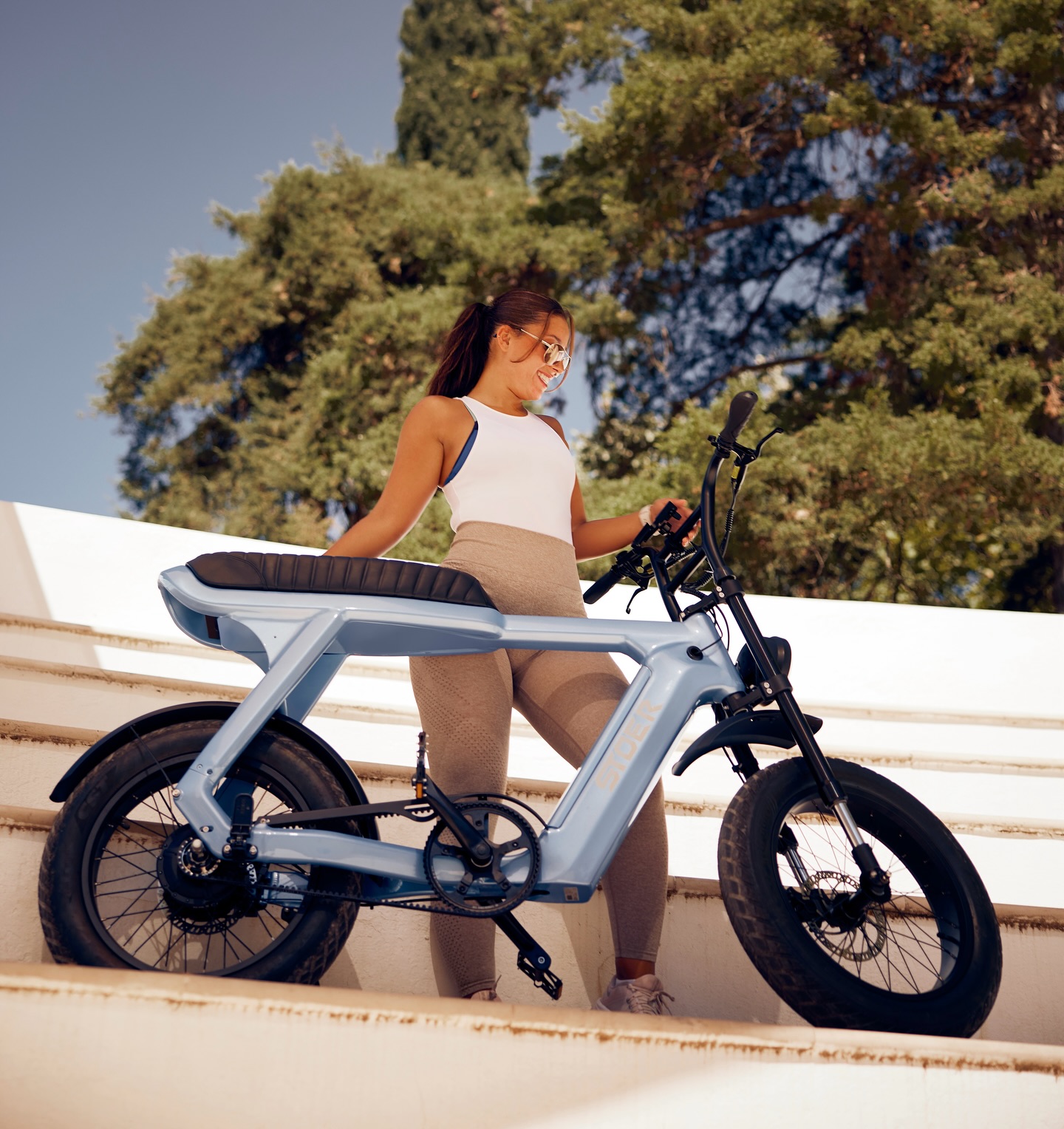
An electric fatbike with belt drive is a visible sustainable statement. It fits perfectly with modern corporate values. When employees ride around town on these eye-catching bikes, they instantly communicate your commitment.

"Customers regularly tell me that their fatbike really stands out," says Thomas of STOER Bikes. "It's no ordinary company bike. It shows that your company is thinking ahead and really doing something about sustainability."

The unique combination of rugged looks and durable technology makes these bikes especially recognizable. Wide tires and electric support provide comfort and convenience. They also impress customers and partners.

Belt drive advantages for company values:

  • Less maintenance and therefore less hassle
  • Longer life, contribution to sustainability
  • Cleaner operation without chain grease, perfect for business attire
  • Quieter drive, contribution to reduced noise pollution

Electric fatbikes can be completely customized in your corporate colors and style. This makes them instantly recognizable as part of your brand. This makes them riding billboards that convey lasting corporate values.

Want to learn more about enterprise applications? Then read our blog "What is the difference between a regular electric bike and an electric fatbike for business use?“

What are the tax advantages of purchasing electric fatbikes for your business?

Purchasing electric fatbikes comes with several tax benefits. These tax benefits significantly reduce the actual cost.

"The tax benefits are really impressive," Thomas explains. "With KIA, MIA and VAT deductions, you sometimes get as much as 50% of your investment back. That suddenly makes it very interesting."

Small business investment allowance (KIA): Electric fatbikes fall under KIA scheme. You can deduct percentage of investment from profit. It depends on total investment amount per year. Can be up to 28% for investments up to €328,721.

Environmental Investment Allowance (MIA) and VAMIL: MIA gives additional deduction percentage on top of normal investment deduction. For electric fatbikes, this can reach 36%. VAMIL scheme allows you to write off 75% of investment at self-selected time. Favorable for cash flow.

VAT benefits: Electric fatbikes for business use are fully deductible as business expenses. VAT on purchase is also deductible. For business use, you can reclaim VAT on charging costs.

Employee bicycle scheme: For business owners who provide electric fatbikes to employees, there is bicycle regulation. Provide bicycle with additional tax credit 7% list value. Much lower than addition for cars.

Want to learn more about tax opportunities? Then read our blog "Fatbike law changes 2025: what do you need to know?“

How do you use an electric fatbike as a signboard for your sustainable business values?

How do subsidies for electric company bikes vary by country?

Various subsidy schemes are available in the Netherlands and surrounding countries. They make purchase more attractive but vary considerably by region.

"Subsidies vary enormously from country to country," says Thomas. "In Belgium you get mileage reimbursement, in Germany there are lease models. The Netherlands has local subsidies. It pays to find out well."

Netherlands: Many municipalities and counties offer local grants:

  • Amsterdam: special scheme for switching from polluting vehicle to sustainable alternative
  • Rotterdam: subsidies aimed at city distribution with electric cargo bikes

Belgium: System of bicycle allowances. Employees receive up to €0.24 per kilometer tax-free for commuting by bicycle. Provincial and city incentives available.

  • Flanders: companies to receive up to €4,000 subsidy for electric cargo bikes

Germany: "Jobrad" leasing model popular with tax benefits from government. Some states such as Baden-Württemberg offer additional subsidies.

  • 30% of purchase price electric transport bikes (maximum €3,000)

France: Ambitious "Plan Vélo" with national subsidy for electric bikes. Can reach up to €400 per bike. Companies benefit from increased depreciation for sustainable means of transportation.

It pays to research local grants in your area. These schemes change regularly and are often regionally tied.

Want to learn more about international opportunities? Then read our blog "8 Main differences between entry-level and premium fatbikes“

What are the benefits of leasing options for electric fatbikes in a business context?

Leasing electric fatbikes offers financial flexibility and practical benefits. It simplifies implementation of sustainable mobility solutions. Different leasing constructions possible with their own characteristics.

"Leasing is becoming increasingly popular with companies," Thomas explains. "Operational leasing works especially well. Everything included, predictable costs, and new bikes after a few years."

Operating lease: Leasing company retains ownership of bikes. You pay fixed monthly amount for use. Amount usually covers maintenance and insurance. Costs remain predictable.

Advantages: does not strain balance sheet, bikes easily replaced with newer models after lease period.

Finance lease: Bicycles are recorded as property on balance sheet. Spread payment over several years. At end of lease you automatically become owner. Attractive for long-term use.

Business bike plan: Specific type of lease where employees can use bicycle through gross-net benefit. Works through net-metering scheme. Provides tax benefits for employer and employee.

Benefits leasing summarized:

  • No large initial investment, improves cash flow
  • Easy incorporation into existing mobility budgets
  • Often includes maintenance and insurance
  • Flexible contract term (usually 24 to 60 months)
  • Ability to upgrade regularly to newer, more durable models

For many companies leasing is ideal way to integrate electric fatbikes. Without major pre-investment in business mobility policies.

Want to learn more about leasing options? Then read our blog "E-fatbike VS E-bike, what are the differences?“

"Purchased a STOER Bike last year after trying several fatbikes. STOER is by far the best! Still very much enjoy my purchase. In addition, the service is top notch!"
"We have been riding a Stoer bicycle for a year now without any problems. Even the battery capacity has not deteriorated. And when you then see other brands where after a year the rust marks are visible I am glad I spent a little more and now have a bike made entirely of aluminum. And this one stays really neat!!!"
What are the main conclusions about the weight difference between drive systems?
"The bike is perfect for people with long legs. Sitting comfort is perfect for long distances."

How do you calculate the ROI of electric fatbikes as part of your sustainability strategy?

Calculating return on investment goes beyond financial aspects. Complete ROI calculation includes direct cost savings as well as indirect value for sustainability goals.

"ROI of sustainability is more than just money," says Thomas. "It's also about image, employee health and access to new markets. All of that has value."

Calculate immediate cost savings: Compare cost of electric fatbikes with traditional transportation equipment:

  • Acquisition cost (less subsidies and tax breaks)
  • Operating costs (electricity vs. fuel)
  • Maintenance costs (belt drive significantly less maintenance)
  • Parking costs (bikes don't need expensive parking spots)
  • Savings in toll and congestion costs city centers

Indirect value calculation: Harder to monetize, but certainly no less important:

  • CO2 reduction as part of CSR objectives
  • Improving corporate image and brand authenticity
  • Health benefits employees (reduced absenteeism)
  • Higher productivity through reduced travel time busy cities
  • Attracting environmentally conscious customers and employees

Practical ROI formula: (Total savings - Total cost) / Total cost × 100%

For complete sustainability ROI, add value to non-financial benefits. Link them to sustainability goals or marketing KPIs.

Payback period electric fatbikes with belt drive is often shorter than thought. Especially with frequent use and all the benefits factored in.

Want to learn more about sustainable benefits? Then read our blog "10 advantages of fatbikes for daily use in the city“

What are the key insights for companies looking to implement electric fatbikes?

If you are considering implementing electric fatbikes as a signpost for sustainable corporate values, there are crucial insights. These can strengthen your decision-making.

"Implementation doesn't have to be complicated," Thomas explains. "Start small, test it out, and then you can always expand. Most companies are so excited that they want more fatbikes soon."

Financial strength: Combination of financial benefits (subsidies, tax deductions, lower operating costs) makes business case stronger than entrepreneurs expect. Belt drive in particular delivers long-term cost savings through less maintenance and longer life.

Marketing value: Visibility electric fatbikes in streetscape has much greater marketing value than traditional advertising. If company presents itself as sustainable, this is authentic way to put values into practice.

Practical next steps for implementation:

  1. Start pilot by testing small fleet in daily operations
  2. Research local grants and tax breaks specific to your region
  3. Compare purchase versus lease options based on financial situation
  4. Involve employees in initiative to build support
  5. Measure and communicate positive impact both internally and externally

At STOER Bikes, we see more and more entrepreneurs choosing our belt-driven electric fatbikes. Not only because of practical advantages, but also because they are tangible proof of commitment to sustainability.

The combination of robust design, innovative technology and environmental friendliness makes these bikes the perfect signboard. For companies that want to promote sustainable values.

By incorporating electric fatbikes, you are making a clear statement. This goes beyond words alone. You show that sustainability is not a marketing term, but fundamental part of business operations.

Want to know more about implementation? Then read our blog: "Fatbike for adults: which one suits you best?“