Free delivery in NL and BE
Tested best in the Netherlands & Belgium with 8.5 and 8.2 by Fietstest.nl, Het AD and HLN

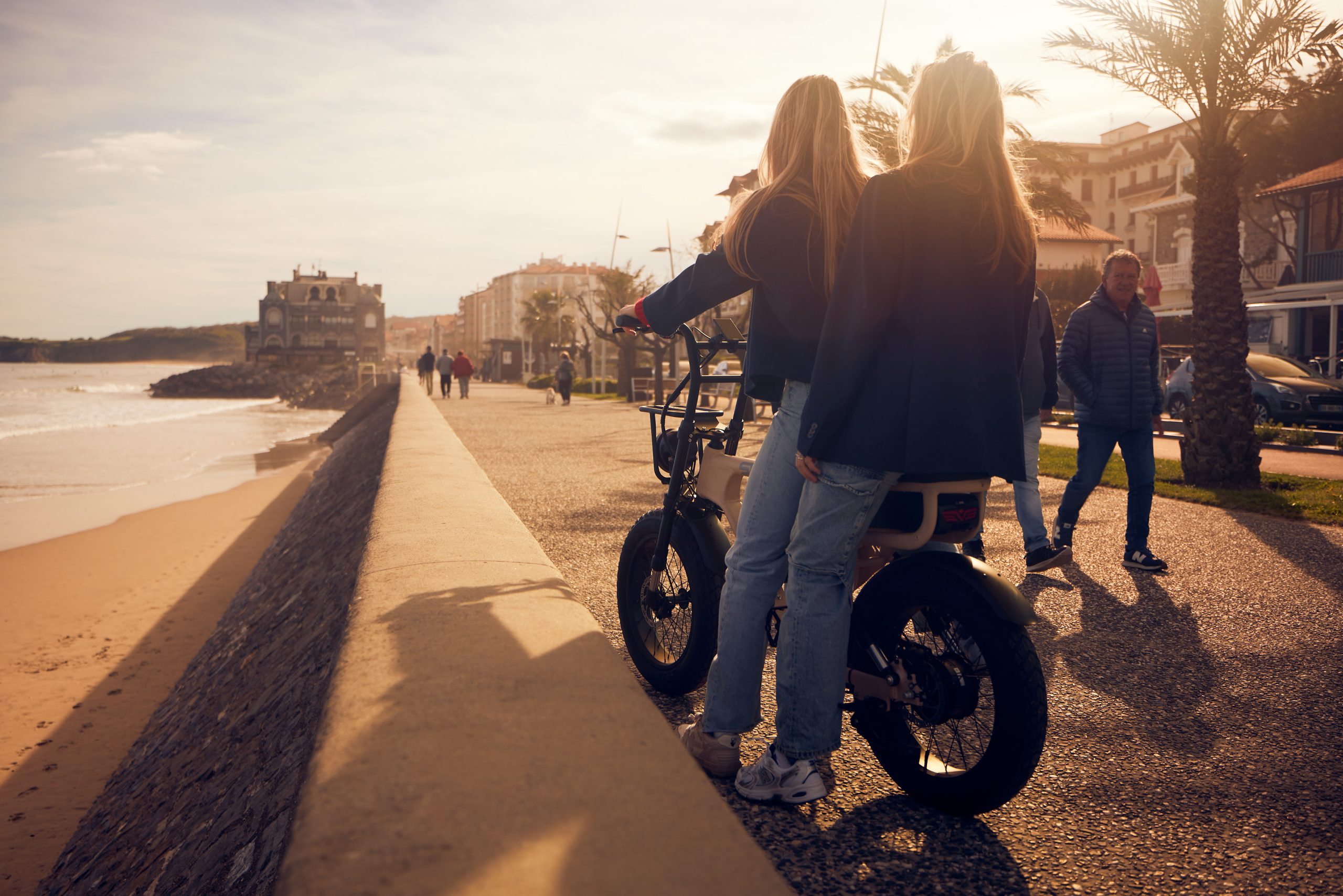
How much time do you save in the city with an electric fatbike compared to a car?

An electric fatbike can save you up to 15-30 minutes of travel time on an average 10-kilometer city commute, compared to a car during rush hour. This is because with an electric fatbike you can effortlessly bypass traffic jams, avoid having to find a parking spot and use bike lanes and shortcuts. With an average speed of 25 km/h and direct routes, you will often reach your destination faster. In addition, an electric fatbike offers significant cost savings through lower purchase and maintenance costs, tax breaks and subsidies.


How much time do you save in the city with an electric fatbike compared to a car?

How much travel time will you save with an electric fatbike in the city?

"What I hear a lot from people who switch is: I'm really much faster at the office," Laurens says. "They never expected it, but with a fatbike you just don't depend on crowds. You ride past the traffic jam, park right in front of the door - it just saves half an hour a day."

In Dutch cities, you can use a electric fatbike save an average of 15-30 minutes per trip compared to driving during rush hour. This is mainly because as a cyclist you don't get stuck in traffic jams and don't lose time looking for a parking spot.

The average speed of a car in busy cities like Amsterdam, Rotterdam and Utrecht is often under 15 km/h during rush hour, while on an electric fatbike you can maintain a constant speed of about 25 km/h. Moreover, with a fatbike you can often take more direct routes by using bike paths, shortcuts and car-free zones.

For short distances of up to 5 kilometers in the city, you are with a electric fatbike almost always faster than by car. For medium distances (5-15 kilometers), the difference becomes even greater during rush hours. The biggest time gain is in consistency: where travel times with the car can vary greatly depending on traffic density, travel times with an electric fatbike are much more predictable.

Want to know more about electric fatbikes in the city? Read our blog about 10 tips for the city.
What are the tax advantages of an electric fatbike for commuters?

"Many people don't know that they can receive up to €0.21 per kilometer tax-free," Laurens explains. "And unlike a leased car, you don't have to add anything. That makes it really attractive financially."

As a commuter, you can take advantage of various tax benefits when purchasing and using a electric fatbike. The most important is the bicycle scheme that allows you to purchase an electric fatbike through your employer with tax benefits.

Through the work expense scheme, your employer can offer a electric fatbike make available without it being considered wages. This means that you don't pay an additional tax liability like you would for a car. If you use your electric fatbike for commuting, you can also qualify for a mileage allowance of up to €0.21 per kilometer, tax-free.

Compared to car use, the tax advantages are significant: no road tax (an average of €800 per year), no additional tax, no fuel excise tax and a lower insurance premium.

Curious about the differences between e-bikes? Check out our blog on E-fatbike VS E-bike.

What subsidy schemes are there for electric bicycles in the Netherlands?

In the Netherlands, there are several subsidy schemes for electric bicycles, although this varies by municipality and region. There is no national subsidy scheme specifically for individuals, but local governments often offer support.

"Always check with your municipality to see if there is a subsidy," Laurens advises. "It varies enormously from place to place, but sometimes you get €500 to €1000 back just like that. A lot of people pass that up because they don't know about it."

Several municipalities such as Amsterdam, Rotterdam, Utrecht and The Hague periodically have subsidy schemes for the purchase of electric bicycles and cargo bikes. These subsidies usually range from €300 to €1000, depending on the type of bicycle and the specific scheme.

There are more opportunities for companies, such as the MIA/Vamil scheme for entrepreneurs investing in environmentally friendly business assets. It is always wise to check before purchasing what schemes are currently available.

Want to know which fatbike is best for you? Check our blog about fatbikes for adults.

"Finally a fatbike you can ride without having your knees next to your ears."
"The bike is perfect for people with long legs. Sitting comfort is perfect for long distances."
"We have been riding a Stoer bicycle for a year now without any problems. Even the battery capacity has not deteriorated. And when you then see other brands where after a year the rust marks are visible I am glad I spent a little more and now have a bike made entirely of aluminum. And this one stays really neat!!!"
"Purchased a STOER Bike last year after trying several fatbikes. STOER is by far the best! Still very much enjoy my purchase. In addition, the service is top notch!"

How do leasing options for electric fatbikes work in a corporate environment?

Bike leasing structures offer an attractive option for employers and employees who want to take advantage of electric fatbikes without large upfront investments. With bike leasing, you pay a fixed monthly fee for the use of the bike, usually including maintenance and insurance.

"Leasing is ideal if you don't want to invest a large amount right away," says Laurens. "For €40 to €150 a month, you have a nice electric fatbike, including maintenance. That's a fraction of what a leased car costs."

There are two main forms: operational lease (where the leasing company retains ownership) and financial lease (where you become the owner upon completion). The tax treatment of leased bicycles is favorable - there is no additional tax liability like cars.

An important advantage of electric fatbikes with belt drive is the lower maintenance for business use. This means less downtime, lower maintenance costs and longer service life.

Want to know more about belt drives? Read our blog about why belt drive is better.

How much time do you save in the city with an electric fatbike compared to a car?

What is the ROI of an electric fatbike compared to car use?

"The numbers don't lie," Laurens explains. "If you ride 20 kilometers daily for work, you easily save €4,500 to €10,000 a year. Your fatbike will have paid for itself within a year."

The Return on Investment (ROI) of a electric fatbike relative to a car is impressive. For an average commute of 10 km (return 20 km per day), you can recoup your investment within 1 to 2 years.

Key cost drivers:

  • Electric Fatbike: ±€530 - €880 per year total
  • Car: ±€5,200 - €11,300 per year total

Switching from car to electric fatbike for daily commuting will save you an average of €4,500 to €10,000 per year. This means that your investment in an electric fatbike can pay for itself within 4-10 months.

A belt-drive electric fatbike also has a longer lifespan and lower maintenance costs than traditional chain-drive bikes, further improving ROI.

Wondering how long a belt drive lasts? Check out our blog about longevity of belt drive.

What are the main considerations when switching from car to electric fatbike?

When switching from car to electric fatbike there are several practical aspects to consider. With the right clothing and equipment, cycling in rain or cold is quite doable, and the wide tires of a fatbike offer extra stability in wet or slippery roads.

"The great thing is that with the right equipment, you can cycle all year long," says Laurens. "And what people often forget: your fitness improves, you have less stress, and studies show that cyclists take fewer sick days."

The range of an electric fatbike (40-80 km per charge) is more than sufficient for most commutes. For carrying luggage, fatbikes offer several options such as carriers, panniers and backpacks.

In addition to the time and cost savings already mentioned, there are important health benefits. Regular cycling improves your fitness, lowers stress and increases productivity.

At STOER Bikes we understand that switching from car to electric fatbike can be a big change. That's why we offer belt drive models that require minimal maintenance and are extremely reliable - ideal for everyday use. The combination of robust fatbike tires with electric support ensures that you can cycle comfortably and without much effort.

We see that more and more entrepreneurs and professionals choose an electric fatbike because of the practical advantages: predictable travel times, no parking problems, lower costs and a positive contribution to sustainability. The time you save in traffic and searching for parking space can be spent on what really matters.

Want to know more about maintaining your electric fatbike? Check out our blog about maintenance of belt drive or contact us for personal advice.