Electric fatbikes combine the rugged features of traditional fatbikes with modern electric assistance. The electric motor supports your pedal power, making it easier to cover longer distances and perform heavier transportation. For business use, these electric utility bikes offer a practical solution that combines both efficiency and sustainability. We answer the most important questions about how electric these business fatbikes really are.
Free delivery in NL and BE
Tested best in the Netherlands & Belgium with 8.5 and 8.2 by Fietstest.nl, Het AD and HLN
Electric fatbike: range, battery and motor explained
You can find this in the article:
- What makes a fatbike electric and how does the support work?
- How many miles can you ride an electric fatbike?
- What battery capacity does an electric fatbike need?
- How long does it take to charge an electric fatbike?
- How does the motor of an electric fatbike work?
- What are the benefits of an electric fatbike for business use?
- Maintenance of your electric fatbike
- The electric fatbike as a smart business choice
- Frequently asked questions about electric fatbikes
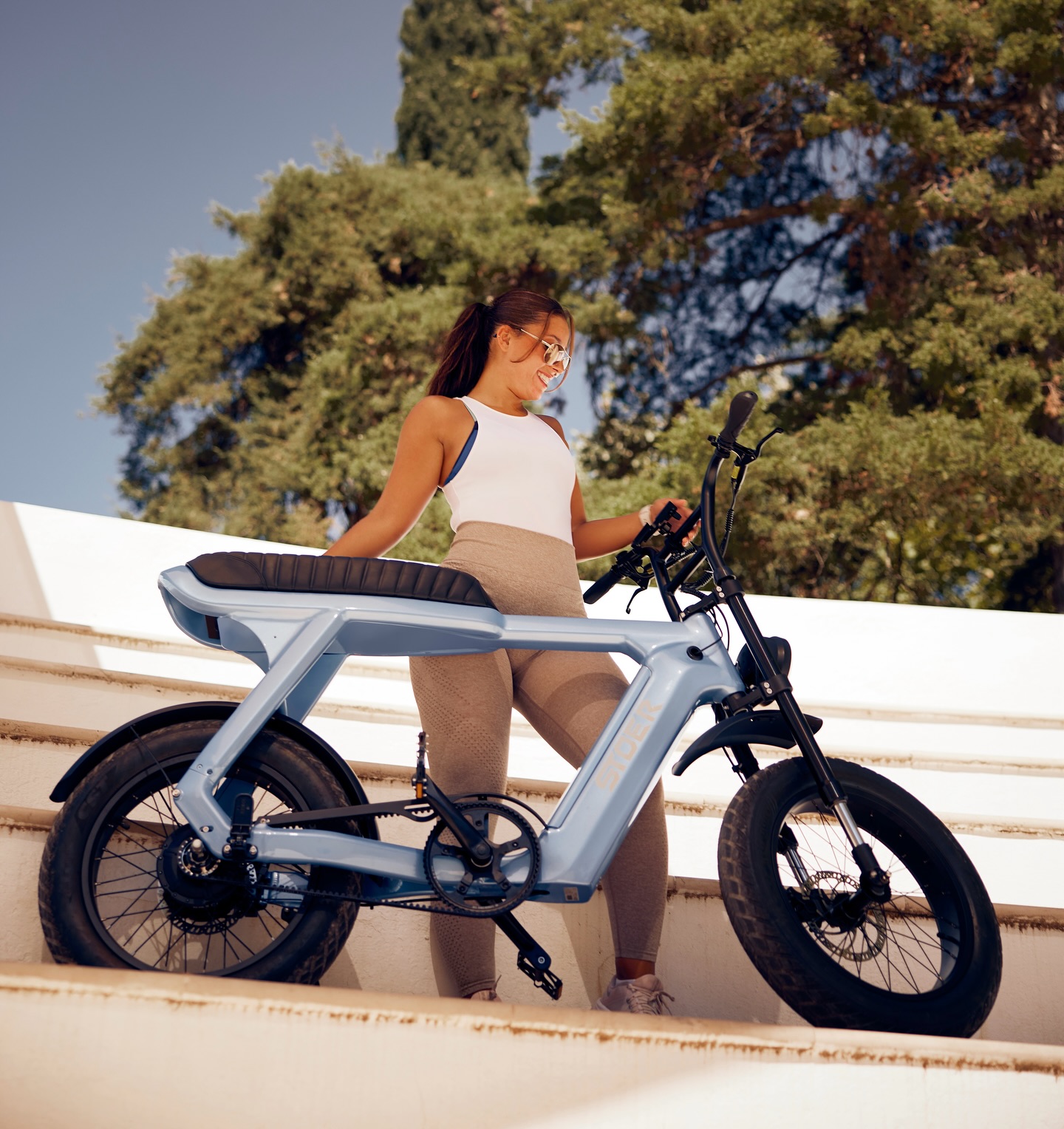
What makes a fatbike electric and how does the support work?
An electric fatbike combines the robust features of traditional fatbikes with modern electric assistance. This is because the electric motor supports your pedal power, making it easier to cover longer distances and perform heavier transportation. For business use, these electric utility bikes therefore offer a practical solution that combines both efficiency and durability.
The electric fatbike is powered by an electric motor that supports your pedal force through an advanced sensor system. The motor thus activates as soon as you start pedaling and then adjusts the support based on the assistance level selected. This system works together with a powerful battery and intelligent control electronics.
The heart of the system consists of three main components: first the electric motor (usually placed in the rear wheel or near the bottom bracket), then the fatbike battery and finally the control unit. The motor provides support up to 25 km/h, after which the electric assistance gradually decreases according to Dutch electric bike legislation.
Support levels typically range from eco mode (minimum support for maximum range) to turbo mode (maximum power for heavy loads). For business electric fatbikes, this is particularly useful when you need to carry cargo or ride against wind, for example. This is because the system automatically detects how much power you provide yourself and then intelligently supplements this.
Modern systems also feature regenerative braking, which recovers energy during braking. This thus increases the electric driving range, making the system more efficient for intensive business use. See the STOER Bikes collection For electric fatbikes with the latest technology.
How many miles can you ride an electric fatbike?
The riding range of an electric fatbike for business use averages between 60 and 100 kilometers, depending on battery capacity, riding conditions and usage pattern. Indeed, with a 720Wh battery as in the STOER UrbanX and CityX, you can reach 80-100 kilometers under normal conditions. Therefore, for intensive business transportation, these are realistic expectations.
Several factors affect your electric riding range. For example, total weight (bike, rider and load) has the biggest impact. In fact, a fully loaded electric fatbike consumes more energy than riding unloaded. Headwinds, hilly terrain and cold temperatures also reduce the range by 20-30%.
Factors affecting outreach
Your riding style also determines how many miles you can cover. Constant use of the highest assistance mode actually shortens the range, while smart switching between assistance levels, on the other hand, maximizes it. For business transportation, we therefore recommend keeping 70% of the theoretical range for reliable planning.
With electric fatbikes, tire pressure also plays an important role. This is because wider tires require more energy, but at the same time offer better stability when carrying business loads. Finding the right balance between comfort, stability and range is therefore important for daily business use.
For example, the STOER CargoX has a larger 960Wh battery, giving you 60-100 kilometers of range despite heavy loading. This is ideal for companies that do a lot of daily miles with cargo. Want to know more? Check out the STOER CargoX specifications.
What battery capacity does an electric fatbike need?
For business use of an electric fatbike, we recommend at least a 720Wh battery, with 960Wh being ideal for intensive applications. This is because these capacities provide enough reserve for unexpected circumstances and ensure that you can ride the entire working day without recharging in between.
Of course, the choice depends on your daily distances and transportation needs. For short trips within the city (20-40 km per day), a 500-720Wh battery is sufficient. Longer routes or heavy transportation, on the other hand, require 720Wh or more. Larger battery capacity does mean more weight and higher purchase cost.
Comparison of battery capacities STOER Bikes
| Model | Battery Capacity | Range | Charging time | Ideal for |
|---|---|---|---|---|
| STOER UrbanX | 720Wh 48V | 80-100 km | 6-8 hours | Commuting, daily use |
| STOER CityX | 720Wh 48V | 80-100 km | 6-8 hours | City shuttle, easy boarding |
| STOER CargoX | 960Wh 48V | 60-100 km | 4-6 hours | Business transportation, heavy loads |
As the table shows, the CargoX offers the largest battery capacity. This makes sense, since you need more power when hauling heavy loads. The CargoX's shorter charging time also compensates for the higher energy consumption during intensive business use.
By the way, the relationship between battery size and performance is not linear. In fact, a 960Wh battery weighs about 1.5 kilograms more than a 720Wh version, but offers 33% more range. For electric fatbikes that are used intensively on a daily basis, this additional investment is therefore often worthwhile.
Modern lithium-ion batteries fortunately retain their capacity better with regular use. So for business electric fatbikes that ride daily, this means that you can enjoy the initial performance for longer. When buying, do take into account future capacity reduction of about 20% after 3-4 years of intensive use.
How long does it take to charge an electric fatbike?
A standard fatbike battery fully charges in 4-8 hours with the provided charger, depending on its capacity. For example, the STOER UrbanX and CityX with 720Wh battery charge in 6-8 hours, while the CargoX with 960Wh battery, on the other hand, charges in 4-6 hours thanks to a more powerful charger.
For electric company bikes, there are several charging strategies that increase efficiency. Indeed, partial charging during breaks can extend the range without long waiting times. Modern batteries can also be safely partially charged without damage to their service life.
Smart charging tips for business use
Smart charging schedules help companies control costs. In fact, charging during off-peak hours (night rate) saves money and puts less strain on the power grid. Therefore, many companies install charging stations at the workplace so that electric fatbikes can recharge during working hours.
Temperature also affects charging speed and efficiency. This is because in cold conditions, charging takes longer and capacity is temporarily reduced. Therefore, for optimal performance, charge the battery at room temperature. Moreover, never store the fatbike battery fully empty or fully full for long periods of time.
For companies with multiple electric fatbikes, it pays to invest in professional charging infrastructure. This makes it possible to charge multiple bikes simultaneously and optimize charging cycles for maximum life of all batteries.
By the way, a handy feature of all STOER Bikes models is the removable battery. You can either charge the battery in the frame or take it out and charge it separately. This is especially handy when you store the electric fatbike outside but want to charge the battery inside.
"Finally a fatbike you can ride without having your knees next to your ears."

"The bike is perfect for people with long legs. Sitting comfort is perfect for long distances."

"We have been riding a Stoer bicycle for a year now without any problems. Even the battery capacity has not deteriorated. And when you then see other brands where after a year the rust marks are visible I am glad I spent a little more and now have a bike made entirely of aluminum. And this one stays really neat!!!"

"Purchased a STOER Bike last year after trying several fatbikes. STOER is by far the best! Still very much enjoy my purchase. In addition, the service is top notch!"

How does the motor of an electric fatbike work?
STOER Bikes' electric fatbikes are equipped with a Bafang H720 motor, known for its reliability and smooth support. This motor delivers 250W of power and has 2-speed automatic gears. This means you never have to shift gears yourself and you always get optimal support.
Torque varies by model and is tailored to the intended use. In fact, the UrbanX and CityX have 55Nm of torque, which is more than sufficient for daily use and commuting. In contrast, the CargoX has 92Nm of torque, specially designed for carrying heavy loads up to 150 kg.
Advantages of the automatic shifting system
- You never have to shift gears yourself, keeping you fully focused on the road
- The motor automatically detects the optimal gear for each situation
- Smooth transition between gears prevents shocks and wear
- Ideal for novice cyclists not used to shifting gears
- Perfect for city commute with lots of stop-start traffic
The motor activates as soon as you start pedaling via an advanced force sensor. This means that the support responds instantly to how much force you apply yourself. If you pedal harder, you get more support. This therefore feels much more natural than systems with only a rotation sensor.
"The power sensor makes all the difference," says Joeri of STOER Bikes. "This makes our electric fatbike feel more like a real bike than a moped. After all, you control the support yourself by pedaling harder or softer."
What are the benefits of an electric fatbike for business use?
For business use, an electric fatbike offers several advantages over traditional company bikes or cars. First of all, the operational costs are much lower: charging costs only a few cents per kilometer, while fuel and parking costs are eliminated. So this makes a big difference in your operating costs.
In addition, an electric fatbike offers excellent accessibility in urban areas. In fact, you can go everywhere that cars are not allowed or cannot, such as pedestrian areas and narrow streets. Moreover, you never have to search for parking spaces, which saves time during working hours.
Cost comparison: electric fatbike versus car
| Cost item | Electric fatbike | Company car |
|---|---|---|
| Purchase | €3.000-6.500 | €20.000+ |
| Energy per 100 km | €0,25 | €12-15 |
| Maintenance per year | €100-200 | €800-1.200 |
| Insurance per year | €50-100 | €600-1.200 |
| Parking fees | €0 | €500-2.000+ |
As the table clearly shows, with an electric fatbike you save thousands of euros per year. Especially the energy costs are spectacularly lower: only €0.25 per 100 kilometers versus €12-15 for a car. This therefore makes the electric fatbike a smart business investment.
The health benefits are also not to be underestimated. In fact, even with electric assistance, you get exercise, which improves your employees' fitness and productivity. Research also shows that cycling employees are less likely to be sick.
Finally, an electric fatbike contributes to your sustainability goals. Your CO2 emissions are virtually zero, which is good for the environment as well as for your corporate image. After all, more and more customers appreciate it when companies make sustainable choices.
Maintenance of your electric fatbike
An electric fatbike requires relatively little maintenance, especially if you choose a belt-drive model like the STOER Bikes. This is because the Gates CDX belt drive requires no lubrication and lasts 20,000-30,000 kilometers. So this saves a lot in maintenance costs and time.
The electrical system itself is virtually maintenance-free. The Bafang motor and control electronics do not require periodic maintenance. However, it is smart to have an annual software update and the electrical connections checked by a dealer.
Maintenance tips for maximum longevity
- Charge the battery regularly, even when not in use (ideally between 20-80%)
- Store the electric fatbike preferably dry and at room temperature
- Check tire pressure monthly for optimal range and comfort
- Have an annual major service performed at an authorized dealer
- Clean the bike regularly, but never use a pressure washer on electrical components
Maintenance costs for an electric fatbike average between €100-200 per year, including brake pads and minor repairs. The biggest expense is battery replacement after 3-5 years, which costs €400-700 depending on capacity. Fortunately, with proper maintenance, your battery will last longer.
STOER Bikes offers a 2-year warranty on the battery, motor and all moving parts. The CargoX also has a 5-year frame warranty. So this gives you security for your business investment. Want to know more about warranty conditions? Check the STORY insurance page for extended coverage.
The electric fatbike as a smart business choice
An electric fatbike offers business users a reliable, sustainable transportation solution that perfectly suits modern mobility needs. With the right battery capacity and charging strategy, you get a versatile workhorse that combines both efficiency and environmental friendliness.
At STOER Bikes, we understand these business needs, which is why we develop innovative electric fatbikes that fit your business operations exactly. That's because our models combine powerful Bafang motors with low-maintenance Gates CDX belt drive and comprehensive security options.
Wondering which electric fatbike is best for your business? Then book a test drive and experience the difference for yourself. Or view the complete STOER collection for all specifications and prices.
Frequently asked questions about electric fatbikes
Can I use an electric fatbike without electric assistance?
Yes, you can always ride without motor assistance by turning off the system. The fatbike then rides like a regular bike, although the extra weight of motor and battery (about 6-8 kg) is noticeable. So for emergencies or when the battery is dead, you remain mobile.
What are the maintenance costs of an electric fatbike per year?
Annual maintenance costs average between €100-200, similar to regular bikes plus battery maintenance. The biggest cost is battery replacement after 3-5 years (€400-700). Regular maintenance of brakes and tires also extends the lifespan and prevents expensive repairs.
How heavy can the load I can carry be?
The STOER electric fatbikes have a maximum load capacity of 180 kg (UrbanX and CityX) including rider. The CargoX has a load capacity of 150 kg in the box. So you can carry an average of 40-80 kg extra load, depending on your own weight. Always use suitable carriers and distribute the weight evenly for optimal stability.
Are electric fatbikes suitable for use in bad weather?
Yes, electric fatbikes are excellent for rain, snow and muddy conditions thanks to their wide tires and good grip. The electric components are also water-resistant. Note, however, that wet weather can reduce the riding range by 10-15% due to increased rolling resistance.
How do I secure my electric fatbike against theft?
First, always use an ART-certified lock and secure the frame and rear wheel to a fixed object. In addition, take the battery inside whenever possible. STOER models also have standard immobilization and GPS tracking. Finally, consider a good bike insurance policy that covers electrical components.
Can I replace the battery of my electric fatbike with a larger capacity?
In most cases, yes, provided the new battery is compatible with your engine system (voltage and connection). Always check with the manufacturer or dealer first. Upgrading to higher capacity can increase range, but be aware of weight gain and possible warranty loss with non-original parts. STOER Bikes recommends using only original batteries.


