Are you curious about the difference between a fatbike and a regular bike? Choosing between these two bike types is not always easy. In this blog you will read all about the differences in tire width, frame construction, carrying capacity and ease of maintenance. That way you can make an informed choice that fits your situation perfectly.
Free delivery in NL and BE
Tested best in the Netherlands & Belgium with 8.5 and 8.2 by Fietstest.nl, Het AD and HLN
Business fatbike differences: 7 key differences
You can find this in the article:
- What is the biggest difference between a fatbike and a regular bike?
- Why choose a fatbike over a regular bike?
- How is the maintenance of a belt-drive fat bike different from a chain bike?
- Which fatbike fits your situation best?
- Practical tips for choosing between a fatbike and a regular bike
- What else do you need to know about the difference between a fatbike and a regular bike?
- Conclusion: which bike will you choose?
- Frequently asked questions about the difference between a fatbike and a regular bike

What is the biggest difference between a fatbike and a regular bike?
The difference between a fatbike and a regular bike is mainly in the tire width. A fatbike has tires between 3.8 and 5 inches wide. In comparison, a regular bike has tires of 1.5 to 2.5 inches. You notice this difference immediately in the handling.
The wider tires give you more grip on different surfaces. Think wet roads, dirt paths or even snow. Regular bikes do not perform as well on these surfaces. The fatbike also gives you more stability while cycling.
The frame on a fatbike is built sturdier. This is necessary to absorb the extra forces of the wide tires. Because of this, a fatbike weighs between 15 and 20 kilograms. Regular bikes are lighter, weighing between 10 and 15 kilograms.
The wheelbase of a fatbike is longer. This makes you bike more stable, but maneuverability decreases slightly. For everyday use, this means more comfort on longer rides. Especially if you regularly transport gear or equipment.
Why choose a fatbike over a regular bike?
A fatbike offers you versatility that a regular bike does not. You bike without a problem on wet roads, through snow and over unpaved trails. Ordinary bikes have more trouble with this. This makes a fatbike interesting if you want to cycle all year round.
The carrying capacity is higher with a fatbike. You carry 25 to 40 percent more weight than with a regular bike. At the same time, you maintain stability. This comes in handy when you regularly carry stuff.
Stability also means more comfort while cycling. Wider tires dampen vibrations better and provide a smoother ride. You also cycle more comfortably on uneven road surfaces. This saves fatigue on long distances.
A fatbike gives a tough, professional look. The rugged look suits well those looking for a reliable bike. This makes a fatbike attractive for both recreational and business use.
Is a fatbike suitable for daily commuting?
A fatbike is excellent for commuting. You arrive at work in comfort, without having struggled with bad weather or uneven roads. Unlike regular bikes, you will continue to ride safely even in rain and snow.
The stability of a fatbike makes cycling through heavy traffic safer. You have more control over your bike. Even at low speeds, you remain stably upright. Regular bikes feel less stable at low speeds.
However, a fatbike is heavier than a regular bike. If you have to carry your bike up stairs on a daily basis, this is a disadvantage. For those who just bike at street level, this does not play a role. So look carefully at your own situation.
How is the maintenance of a belt-drive fat bike different from a chain bike?
A belt-driven fatbike requires much less maintenance than a regular bike with a chain. You notice this difference mainly in the time and expense you spend. Belts don't need any lubrication and they never rust. They also last three to four times longer than chains.
On a regular bike with a chain, you lubricate the chain every 200 to 300 kilometers. You also regularly check for wear. A belt drive only needs periodic tension checks. You do this about every 1,000 to 1,500 kilometers.
Belts make less noise while cycling. This is nice in the city where noise is a factor. Ordinary bikes with chains make more noise. Especially if the chain is not optimally maintained.
Chains can break while cycling. If so, you are immediately at a standstill and have to repair your bike. Belts almost never break suddenly. You usually get warning signals such as increased vibrations. This is how you schedule maintenance at an appropriate time.
Maintenance costs are also lower with a belt-driven fatbike. You save on lubricants, cleaners and replacement parts. This makes a belt-driven system more cost-effective in the long run.
What does this mean for your wallet?
A regular bike with a chain will cost you between 120 and 180 euros per year in maintenance. With a belt-driven fatbike, you spend an average of 50 to 75 euros per year. Over three to five years, this will save you 200 to 400 euros.
So you recoup the higher purchase price of a fatbike with belt drive. You also have less downtime because maintenance is predictable. This is useful if you depend on your bike for daily transportation.
"Finally a fatbike you can ride without having your knees next to your ears."

"The bike is perfect for people with long legs. Sitting comfort is perfect for long distances."

"We have been riding a Stoer bicycle for a year now without any problems. Even the battery capacity has not deteriorated. And when you then see other brands where after a year the rust marks are visible I am glad I spent a little more and now have a bike made entirely of aluminum. And this one stays really neat!!!"

"Purchased a STOER Bike last year after trying several fatbikes. STOER is by far the best! Still very much enjoy my purchase. In addition, the service is top notch!"

Which fatbike fits your situation best?
The choice between a fatbike and a regular bike depends on your specific needs. For daily use in varying weather conditions, a fatbike is the best choice. Also, if you regularly transport gear, choose a fatbike.
A regular bicycle is lighter and more agile. This makes regular bikes suitable for short rides on paved roads. If you cycle mainly within the city on good bike paths, a regular bike will suffice.
At STOER Bikes, we build fatbikes that make a difference. Our models combine the advantages of a fatbike with modern innovations. Think belt drive, powerful motors and reliable batteries.
Getting acquainted with the STOER fatbikes?
The UrbanX is our best-selling fatbike. This electric fatbike won the title "Best Fatbike 2024" from AD Bicycle Test. You get a Bafang 250W motor with 55Nm of torque and a range of 80 to 100 kilometers. The price is €3,199. Discover the UrbanX here.
For those who want a low step-in, the CityX perfect. This latest fatbike has the same specifications as the UrbanX, but with an easier step up. Ideal for those who value comfort. The price is €3,299. Check out the CityX here.
Do you need a cargo bike? Then the CargoX the best choice. This German Design Award 2025 winner transports up to 150 kg. With a 960Wh battery and 92Nm of torque, you'll ride smoothly with heavy loads. Perfect for families or business use. From €6,495. Learn more about the CargoX.
Practical tips for choosing between a fatbike and a regular bike
First, think about where you primarily bike. Do you often use unpaved trails? Then a fatbike is the smart choice. Do you stay mostly on paved roads? Then a regular bike may suffice.
Also look at the weather in your area. Do you often ride in rain or snow? A fatbike gives you more security. In dry areas with well-maintained roads, you need this advantage less.
How much stuff are you carrying? For those who regularly carry groceries or work stuff, a fatbike is more convenient. The higher carrying capacity makes your bike more versatile. Regular bikes are less suitable for heavy loads.
Test both bike types before you decide. That way you can experience the difference in comfort and stability for yourself. At STOER Bikes we are happy to help you with a test ride. That way you can be sure you're making the right choice.
What do our customers say about the difference?
"After years on a regular bike, I switched to the UrbanX. The difference is huge. I now bike to work even in rain without any problems," says Thomas, co-founder of STOER Bikes.
"The stability of a fatbike gives much more confidence. Especially if you are carrying a passenger or carrying groceries," explains Joeri, who founded STOER Bikes with Thomas.
Laurens, expert at STOER Bikes, adds: "Maintenance of our belt-driven fatbikes is minimal. Customers are happy that they no longer spend time cleaning and lubricating chains."
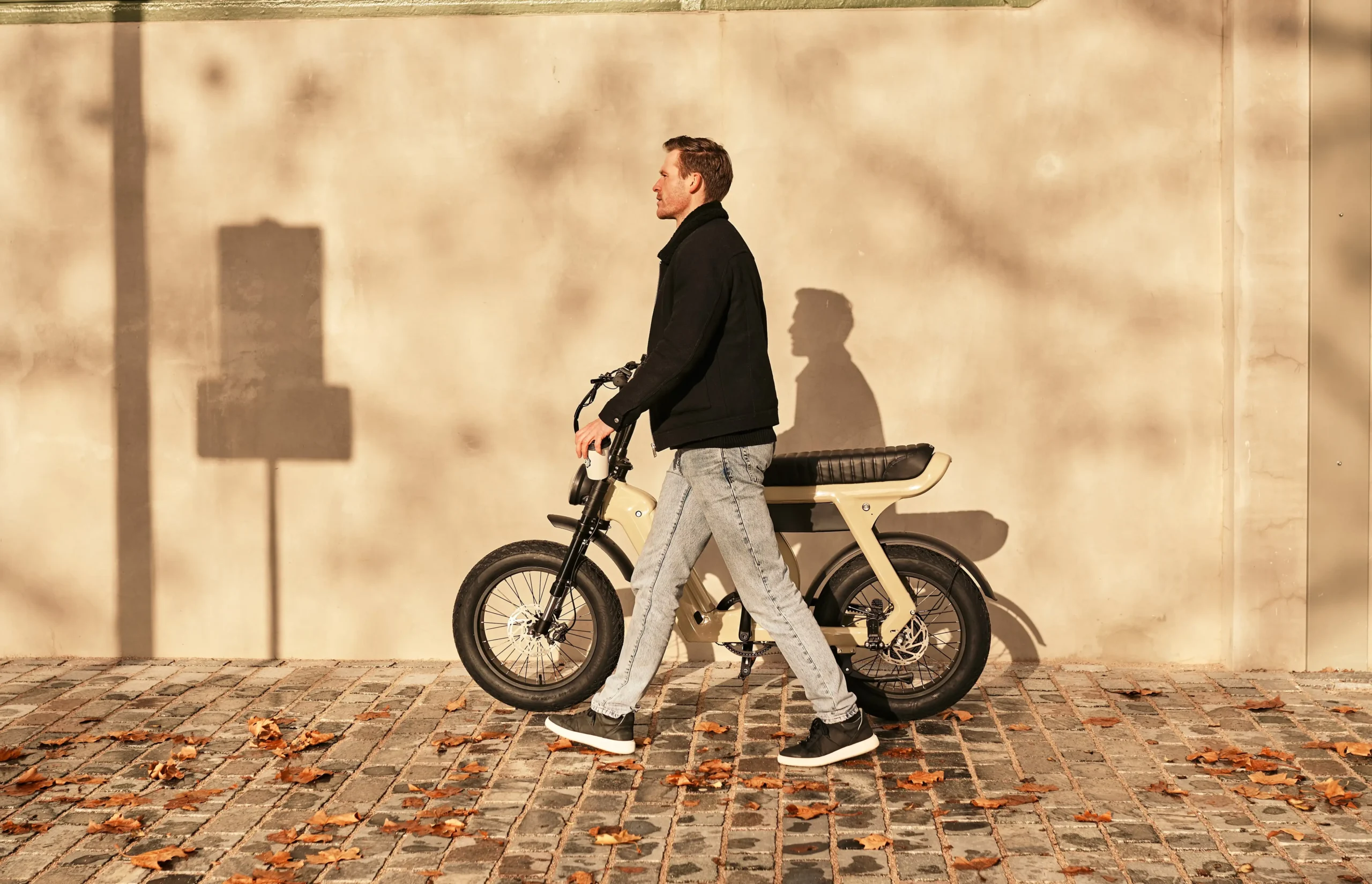
What else do you need to know about the difference between a fatbike and a regular bike?
The weight difference between a fatbike and a regular bike is noticeable. A fatbike weighs more due to its sturdier construction. This can be a disadvantage if you have to carry your bike up stairs. For those who stay at street level, this is less of an issue.
Tire pressure also varies considerably. On a fatbike, you cycle at 0.5 to 1.0 bar. Regular bikes require 4 to 6 bar. Lower pressure means more comfort, but you have to check the pressure more often.
A fatbike takes up more space when parking. In narrow bike racks, this can be inconvenient. So check if you have enough parking space. At STOER Bikes, we design our fatbikes to be as compact as possible, without compromising on stability.
The purchase price of a fatbike is higher than that of a regular bike. However, you are investing in durability and comfort. With lower maintenance and longer life, you'll recoup this difference. Read more about maintenance tips on our blog.
What about insurance?
Insuring a fatbike is wise due to its higher purchase value. At STOER Bikes, we offer a specially developed insurance policy. You get three years of new value coverage with no deductible in case of theft. 24/7 roadside assistance is also included.
Ordinary bicycles are often cheaper to insure. The difference in premium depends on the value of your bike. Good insurance protects your investment. That way you cycle around worry-free.
Conclusion: which bike will you choose?
There is a big difference between a fatbike and a regular bike. A fatbike offers more stability, higher carrying capacity and better performance in all weather conditions. Regular bikes are lighter and more agile for short rides on paved roads.
For those who cycle daily and value comfort, a fatbike is the best investment. Especially with belt drive, you save time and money on maintenance. At STOER Bikes you will find fatbikes that make a difference in quality and ease of use.
Want to experience the difference for yourself? Schedule a test ride and find out which bike suits you best. Our team is happy to help you with tailored advice. Contact us here.
Frequently asked questions about the difference between a fatbike and a regular bike
How long does it take to get used to riding a business fatbike after years of using a regular bike?
Most people get used to a fatbike within one to two weeks. You'll notice the biggest difference in the slightly slower acceleration and weight on sharp turns. Start with short rides to familiarize yourself with the wider tires. After the familiarization period, you will actually experience more comfort and confidence while cycling.
What are the actual maintenance costs of a belt-driven fatbike compared to a regular bike over a year?
A belt-driven fatbike costs an average of 50 to 75 euros per year in maintenance. A regular chain-driven bike will cost you 120 to 180 euros. This difference is due to less frequent lubrication and longer life of parts. Over three to five years, you save 200 to 400 euros, which partly compensates for the higher purchase price.
Can I use my existing bike accessories such as bags and lights on a fatbike?
Most standard bicycle accessories are compatible with a fatbike. Do check the attachment points and dimensions. Some narrow panniers may not fit the wider frame. Lights and computers can usually be taken over directly. If in doubt, check with the supplier beforehand.
How does a fatbike perform in winter compared to a regular bike with winter tires?
Fatbikes surpass regular bikes with winter tires because of their natural grip. The wider tires ride at lower pressures for more contact with the road surface. The heavier frame provides extra stability on slippery surfaces. You have less chance of slipping and more control during sudden movements.
What happens if the belt on my belt-driven fatbike breaks during a ride?
Belt breakage is rare and usually happens gradually with warning signs. For emergencies, take a spare belt with you (weighs only 200 to 300 grams). You replace it within 10 to 15 minutes with basic tools. Many users schedule preventive maintenance to minimize this risk.
Is an electric fatbike suitable for people of different heights?
Yes, electric fatbikes are suitable for a variety of users. The electric assistance makes differences in fitness less important. Most models have adjustable seat posts and handlebars. The stable riding style also gives inexperienced cyclists more confidence. For optimal comfort, choose the right frame size.
What advantages does a fatbike offer specifically for urban use?
In the city, a fatbike offers more stability on streetcar rails and speed bumps. Wider tires reduce the chance of punctures caused by sharp objects. This means less downtime. Also, the tough look gives a professional impression. Stability at low speeds makes maneuvering in heavy traffic safer.
What is the maximum weight I can carry on a fatbike compared to a regular bike?
A fatbike carries 25 to 40 percent more weight than a regular bike. At STOER Bikes, our fatbikes can carry up to 180 kg (including rider and passenger). Regular bikes often carry a maximum of 100 to 120 kg. This makes fatbikes ideal for carrying groceries or work equipment.


