More and more Dutch families are asking themselves the question: cargo bike vs car, which suits us better? Because the cost of driving a car is rising every year, while traffic jams are only getting longer. At the same time, parents are looking for ways to transport their children safely and sustainably. An electric cargo bike offers a surprisingly good alternative to that second car. In this article we compare both options on cost, convenience, safety and environmental impact. So you can make an informed choice for your family.
Free delivery in NL and BE
Tested best in the Netherlands & Belgium with 8.5 and 8.2 by Fietstest.nl, Het AD and HLN
Bicycle vs car: why families are switching in 2026
You'll find this in the article
- The cost compared: cargo bike vs car
- Convenience and practical use in daily life
- Safety for your children
- Environmental impact: cargo bike vs car compared
- When does the car remain the better choice?
- Here's how to make the switch from car to cargo bike
- Overview: cargo bike vs car in figures
- What do the experts say?
- Summary: cargo bike vs car
- Frequently asked questions about cargo bike vs car
The cost compared: cargo bike vs car
If you compare cargo bike vs car, the financial differences are striking. An average second car will quickly cost you €400 to €600 per month in fixed expenses. Think of insurance, road tax, fuel, maintenance and depreciation. On an annual basis, that adds up to €5,000 to €7,000 in costs, not including parking fees or fines.
An electric cargo bike, on the other hand, requires a one-time investment. The STOER CargoX costs from €6,495 and will last at least 8 to 10 years with normal use. So per year you pay about €650 to €800 in depreciation. Add to that the electricity costs of about €30 to €50 per year, plus annual maintenance of about €100. The total comes out to a maximum of €950 per year. So you save up to €5,000 per year compared to a second car.
Case study: family with two children
Imagine this: you live in a medium-sized city and drive your children to school every day. By car, you travel 5 kilometers per trip, so 20 kilometers per day. With a fuel consumption of 1 on 14 and a gasoline price of €2.10 per liter, that will cost you €3 per day. Per school year (200 days) you spend €600 on just fuel for the school ride. With an electric cargo bike, the same ride costs you only €0.05 per day on electricity. Per year that's €10 instead of €600.
Want to know more about the CargoX? Then check out our CargoX product page for all specifications.
Convenience and practical use in daily life
When comparing cargo bike vs car, convenience plays a big role. After all, how convenient is it to be able to get out the door quickly? With a cargo bike, you get on and ride away immediately. You don't have to wait for the engine to warm up, you don't have to look for a parking spot and you are never stuck in traffic. Especially in cities, this saves you a lot of time.
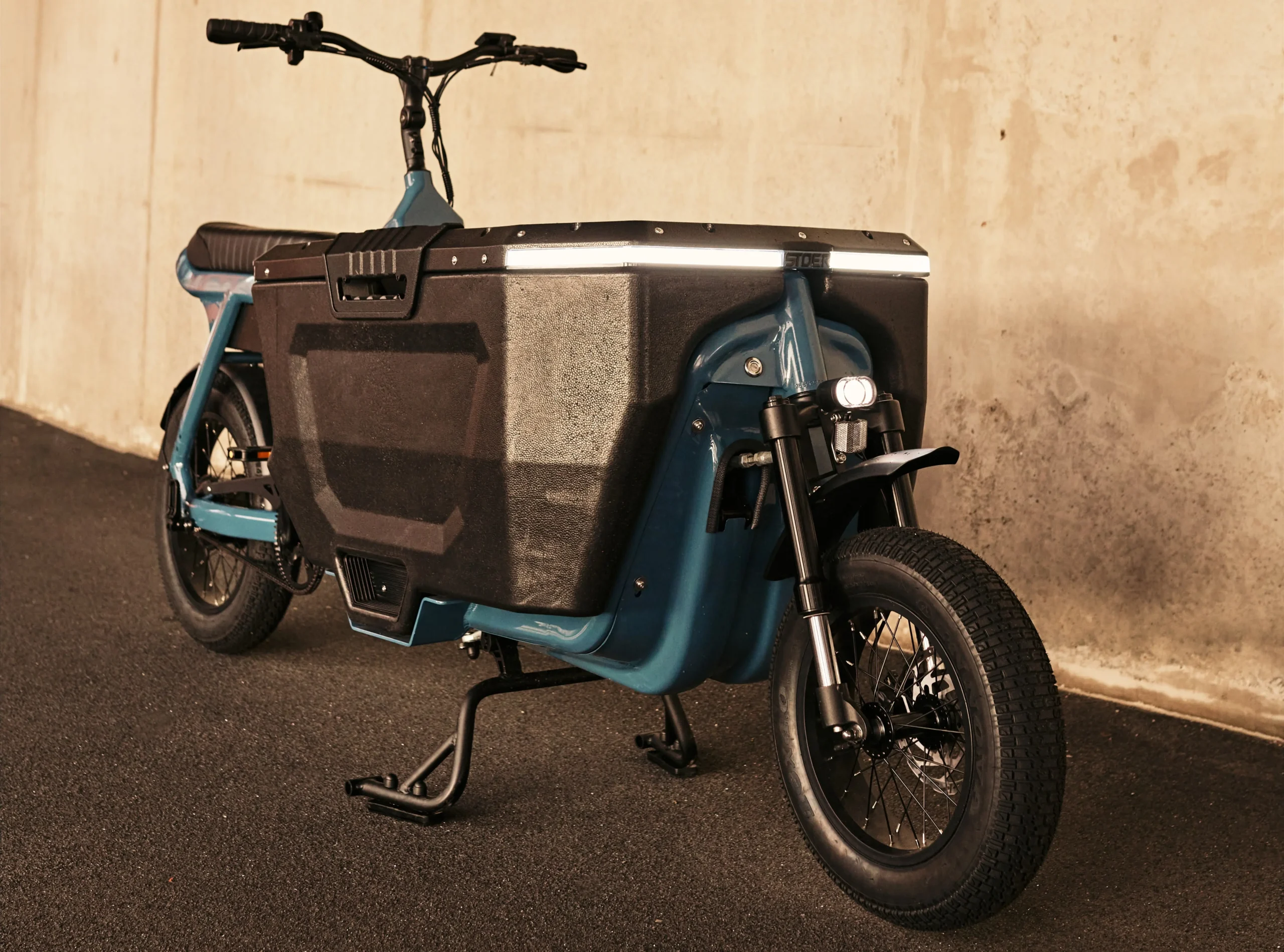
The STOER CargoX offers space for 2 to 4 children, depending on their age. The bin measures 100 by 70 centimeters and has a load capacity of 150 kilograms. That means you can carry groceries, school bags or sports gear in addition to your kids. Thanks to the electric assistance with 92 Nm of torque, you hardly notice that you are carrying extra weight. The automatic shifting system also ensures that you always ride off smoothly, even with a full load.
Parking: no more hassle
A big advantage of the cargo bike over the car is parking. In fact, you park your cargo bike wherever you want: at the school gate, in front of the supermarket or next to the sports field. You don't pay parking fees and don't have to drive around looking for a spot. In cities like Amsterdam or Utrecht, this not only saves you money, but also frustration. The CargoX has a double stand, which keeps the bike stable even when the kids climb in by themselves.
Want to try out the CargoX for yourself? Then schedule a free test drive at a dealer near you.
Safety for your children
As a parent, you want to know: is a cargo bike safe enough for my children? The answer is yes, provided you choose a well-equipped model. The STOER CargoX features sturdy safety belts that meet European standards. The high sides of the cargo box offer extra protection while your children sit comfortably.
What makes the CargoX special are the integrated turn signals. Just like a car, these indicate when you are turning. That way the traffic behind you knows exactly what you are up to. The LED daytime running lights also ensure that you are always clearly visible, even on cloudy days. In addition, the cargo bike has hydraulic disc brakes with integrated brake lights. As soon as you brake, the brake lights come on and warn the traffic behind you.
Thick tires for extra stability
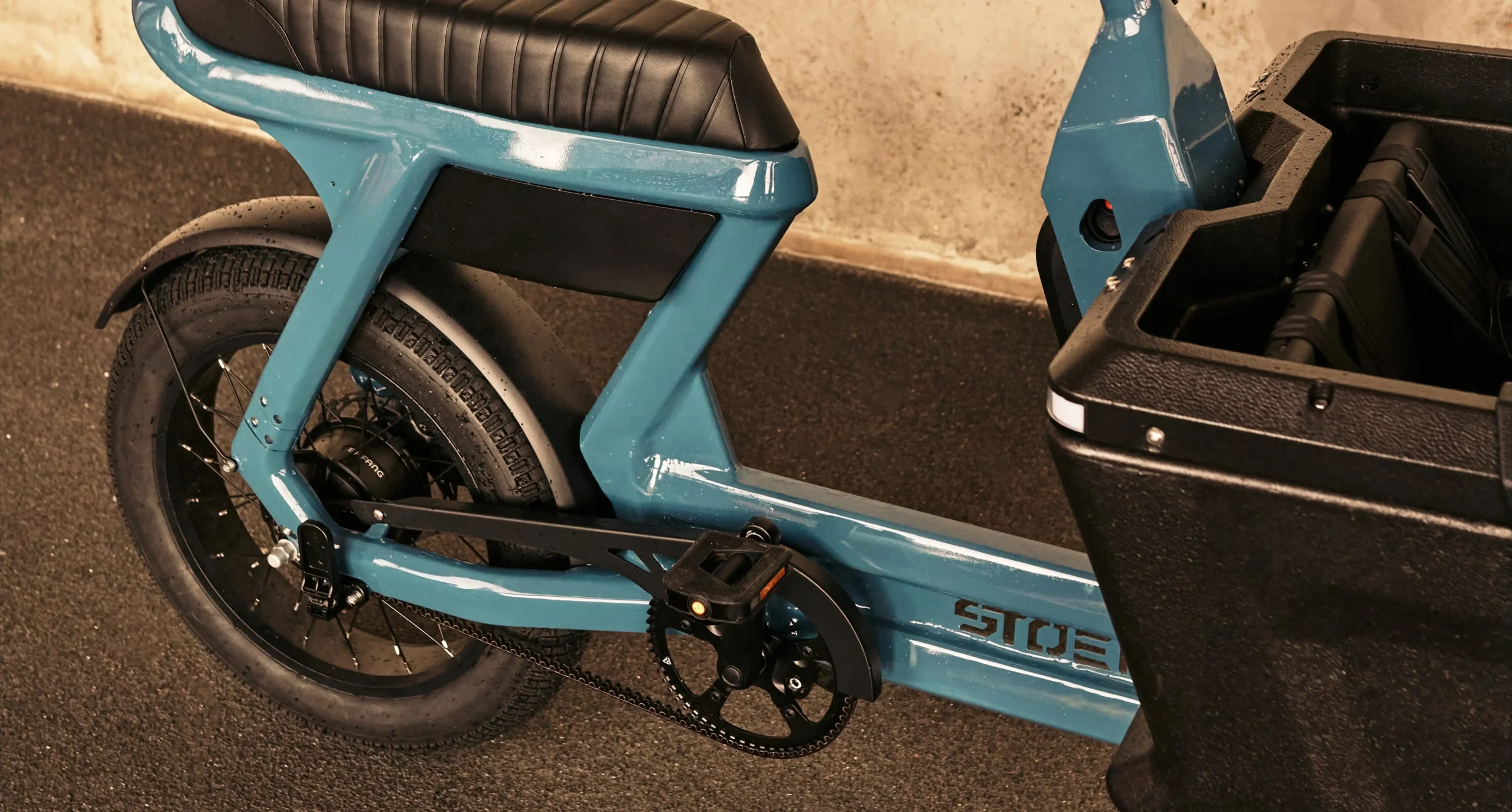
The CargoX has extra-thick fatbike tires of 20×4 inches at the back and 16×4 inches at the front. These tires offer several advantages. First, they provide more grip, even on wet or slippery roads. Second, they absorb shocks, making your children comfortable. Third, they do not get stuck in streetcar rails, which is a well-known safety hazard with regular cargo bikes. The wide wheelbase also ensures that the bike remains stable, even in sharp turns with a full load.
Want to learn more about safe cycling? Then check out our blog on safety and maintenance.
Environmental impact: cargo bike vs car compared
The comparison cargo bike vs car also falls in favor of the cargo bike in terms of environmental impact. An average car emits about 120 grams of CO2 per kilometer. If you drive 20 kilometers every day, you produce 2.4 kilograms of CO2 per day. Per year, that amounts to more than 800 kilograms of CO2 for just the school ride.
An electric cargo bike produces no direct emissions. Even if you include electricity production, CO2 emissions come out to only 5 to 10 grams per kilometer. So you reduce your emissions by more than 90 percent. In addition, the cargo bike produces no particulate matter or nitrogen oxides, contributing to cleaner air in the city.
The CargoX's body is made of EPP material, which is fully recyclable. The Gates CDX belt drive is also more durable than a traditional chain, as it lasts 3 to 5 times longer and requires no lubrication.
"We have been riding a Stoer bicycle for a year now without any problems. Even the battery capacity has not deteriorated. And when you then see other brands where after a year the rust marks are visible I am glad I spent a little more and now have a bike made entirely of aluminum. And this one stays really neat!!!"

What are the main conclusions about the weight difference between drive systems?

"Purchased a STOER Bike last year after trying several fatbikes. STOER is by far the best! Still very much enjoy my purchase. In addition, the service is top notch!"

"The bike is perfect for people with long legs. Sitting comfort is perfect for long distances."

When does the car remain the better choice?
A fair comparison cargo bike vs car also means recognizing when the car is a better fit. For long distances over 15 to 20 kilometers, a car is more practical. You also need a car if you regularly transport large or heavy items that won't fit in the cargo box. In addition, a car is more convenient for vacations or trips to places outside the city.
So many families choose to replace the second car with a cargo bike, while keeping the first car for longer trips. This way you combine the best of both worlds. You save money on the short trips and still have the flexibility of a car when really needed.
Here's how to make the switch from car to cargo bike
Are you considering taking the plunge? Then start with a test drive. That way you can experience for yourself how the cargo bike rides and whether it suits your situation. Pay attention to the ride comfort, the space in the cargo box and the functioning of the electric support. Also test braking and cornering to get a good idea.
Checklist for the transition
Before you make the decision, go through this checklist:
- Calculate how many kilometers you travel on average per day for short trips
- Check if you have enough storage space for a cargo bike
- See the routes you ride daily on safe bike paths
- Calculate how much you'll save compared to your current car expenses
- Schedule a test ride to experience the cargo bike for yourself
Also see the STORY insurance page for information on insuring your cargo bike.
Overview: cargo bike vs car in figures
Overview: cargo bike vs car in figures
The table below lists the main differences:
Aspect Electric cargo bike Second car
Purchase price €6,495 (CargoX) €15,000 - €30,000
Annual cost €800 - €950 €5,000 - €7,000
CO2 emissions/km 5-10 grams 120 grams
Parking costs €0 €500 - €2,000/year
Range 60-100 km 500+ km
Load capacity 150 kg 400+ kg
What do the experts say?
"We see more and more families trading in their second car for an electric cargo bike. The savings are huge and you save time by avoiding traffic jams and parking hassles. Especially in the Randstad, the cargo bike is often faster than the car for trips up to 10 kilometers." - Thomas, co-founder STOER Bikes
Summary: cargo bike vs car
The comparison cargo bike vs car shows that an electric cargo bike is a smart alternative for many families. You save up to €5,000 a year, avoid parking hassles and contribute to a cleaner environment. The safety features of modern cargo bikes like the CargoX are similar to those of cars, including turn signals and brake lights. For short to medium distances in and around the city, a cargo bike is often even more practical than a car.
Of course, a cargo bike does not fit every family. For long distances or vacations, a car is still needed. Many families therefore combine both: a car for longer trips and a cargo bike for daily transport. This way you benefit from the advantages of both means of transport.
Wondering if a cargo bike fits your situation? View all STOER Bikes models or schedule an immediate test ride at a dealer near you.
Frequently asked questions about cargo bike vs car
How much do you save with a cargo bike compared to a car?
A cargo bike will cost you about €800 to €950 per year in maintenance and electricity. A second car costs an average of €5,000 to €7,000 per year. So you will save up to €5,000 per year if you replace the second car with a cargo bike.
Is a cargo bike safe for children?
Yes, modern electric cargo bikes like the STOER CargoX have extensive safety features. Think safety belts according to European standards, high sidewalls, indicators, LED lights and hydraulic brakes with brake lights.
How many children can fit in a cargo bike?
The STOER CargoX fits 2 to 4 children, depending on their age and size. The bin offers 100 by 70 centimeters of space and has a maximum load capacity of 150 kilograms.
How far do you get on an electric cargo bike?
The STOER CargoX has a range of 60 to 100 kilometers per battery charge. The exact distance depends on factors such as loading, terrain, driving style and the level of assistance used.
Can a cargo bike completely replace the second car?
For many families, yes. If you make mostly short trips in the city or region, a cargo bike is often more practical and cheaper. For long distances and vacations, a car remains more convenient. Many families therefore choose to use the cargo bike alongside one car.