Free delivery in NL and BE
Tested best in the Netherlands & Belgium with 8.5 and 8.2 by Fietstest.nl, Het AD and HLN

Can you ride an electric fatbike on all bike paths?

Electric fatbikes Electric fatbikes are not allowed to ride on all bike paths in the Netherlands. Access depends on the classification of your electric fatbike. Fatbikes with pedal assistance up to 25 km/h (pedelecs) are allowed to ride on all regular bicycle paths. Fatbikes with power above 250W or that go faster than 25 km/h without pedaling fall under the category of moped or moped, for which different rules apply. These more powerful fatbikes are often not allowed on bike paths within built-up areas and require a helmet, insurance and license plate.


Can you ride an electric fatbike on all bike paths?

Electric fatbikes are gaining tremendous popularity in the Netherlands, especially in busy urban areas where efficient transportation is becoming increasingly important. These rugged bikes, recognizable by their distinctive wide tires, combine the adventurous nature of a mountain bike with the convenience of electric assistance.

An electric fatbike is essentially a bicycle with remarkably wide tires (usually 10-12 cm) and an electric motor that provides support while cycling. The wide tires provide more grip and stability on different surfaces, while the electric support makes cycling less strenuous.

"Many customers choose our UrbanX because of its versatility," says Joeri. "Perfect for commuting, recreational trips and even transporting belongings." They are suitable for daily use and offer an environmentally friendly alternative to cars in the city, contributing to the growing demand for sustainable mobility solutions.

But before you enthusiastically hit the road, it's important to know that not all electric fatbikes have the same classification and that this determines where you can and cannot ride. Let's dive into the legal provisions.

Want to know more about fatbike features? Then read our blog "Fatbike for adults: which one suits you best?“

What does Dutch law say about electric fatbikes?

In the Netherlands, electric fatbikes are classified by law into different categories depending on their technical specifications. This classification determines where you can and cannot ride.

The standard electric fatbike with pedal assistance of up to 25 km/h and an engine of up to 250 watts is legally considered a regular bicycle (also called a "pedelec"). You can ride this type of fatbike on all regular bike paths and the same rules apply as for a regular bike. You don't need a driver's license, insurance or a helmet.

"All STOER Bikes models meet this standard," Joeri emphasizes. "Our CityX example has exactly 250W and 25 km/h support."

However, if your electric fatbike is more powerful than 250 watts or can go faster than 25 km/h with motor assistance without pedaling, it falls under the category of moped or even moped. Different rules apply to these categories:

Mopeds (up to 25 km/h): Blue license plate required, minimum age 16, insurance required, and, since 2019, mandatory helmet in many cities.

Mopeds (up to 45 km/h): Yellow license plate required, minimum age 16, AM driver's license required, insurance required and helmet required.

These faster categories are often not allowed to ride on bike lanes within built-up areas, but must use the carriageway. Outside of built-up areas, they are usually allowed to ride on bicycle lanes, if indicated by appropriate traffic signs.

Therefore, when buying an electric fatbike, it is important to know what the specifications are and what category it falls under. This prevents unpleasant situations and possible fines.

Want to know more about legislation? Then read our blog "What are the new rules for fatbikes in 2024-2026?“
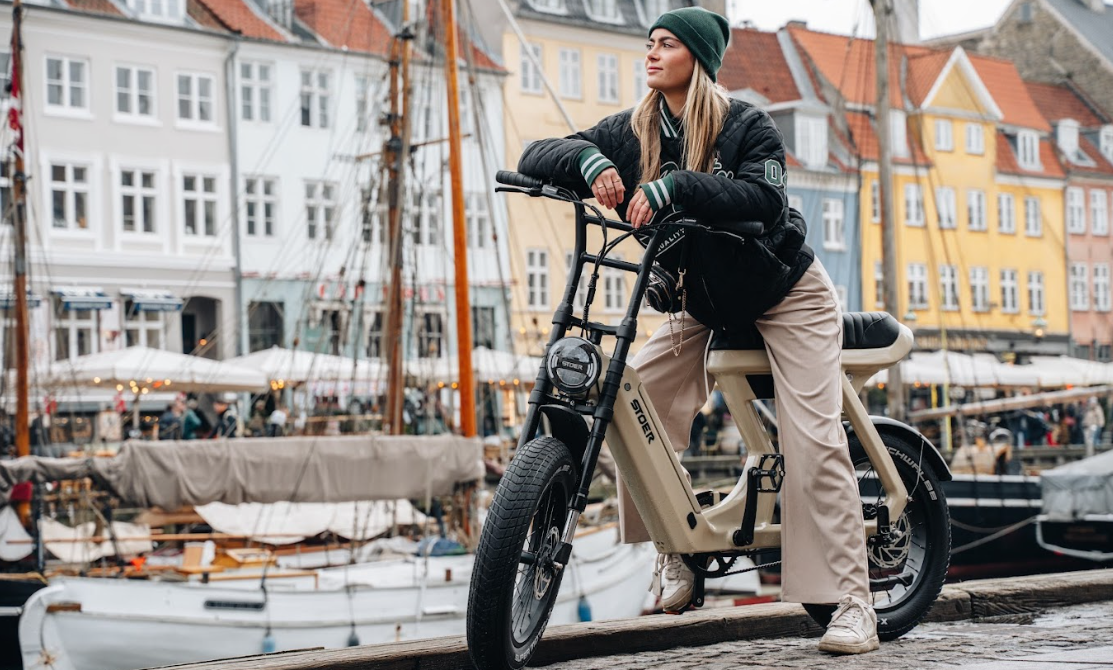
Can you ride an electric fatbike on all bike paths?

What about access to downtown with a fatbike?

Electric fatbikes offer excellent access to inner cities, which is a big advantage over cars. In many Dutch cities, car-free zones are increasing in size and stricter environmental zones have been established. With an electric fatbike classified as a regular bike, you can ride through these zones without restrictions.

Accessibility to city centers is one of the big pluses of electric fatbikes. You can get right to the doorstep of stores, restaurants and other destinations without worrying about:

  • Parking zones and fees
  • Environmental zones and car-free areas
  • One-way traffic (exceptions often apply to bicycles)
  • Traffic congestion and traffic jams

"With our CargoX get you everywhere," says Joeri. "Even in the narrowest streets and busiest shopping areas." In more and more Dutch cities, cyclists are given priority in traffic arrangements. Think of special bicycle stop lights that turn green earlier or bicycle routes that are shorter than routes for motorized traffic. This makes an electric fatbike not only a sustainable, but also a very efficient choice for urban transportation.

In addition, many municipalities make subsidies available for the purchase of electric (cargo) bikes as an alternative to the car, which lowers the threshold for purchase. This fits into the broader policy of making cities more livable and sustainable, and electric fatbikes fit perfectly into this picture.

For business owners, an electric fatbike also offers logistical advantages. You can move around the city quickly and flexibly, which is especially useful if you regularly visit customers or need to make small deliveries. The wide tires make it possible to remain stable even over uneven terrain such as cobblestones or streetcar rails.

Want to know more about business use? Then read our blog "What is the difference between a regular electric bike and an electric fatbike for business use?“

What are the advantages of a fatbike for parking in the city?

Parking an electric fatbike in the city offers huge advantages compared to a car. First, there is the space advantage: the space of one car parking space can accommodate an average of 8-10 bikes. This means you can almost always park close to your destination.

Key parking benefits at a glance:

  • No search time for a parking spot, which can often save 10-20 minutes in busy cities
  • No parking fees, which in city centers quickly saves €4-8 per hour
  • Be able to park directly in front of stores, restaurants and appointments
  • Access to dedicated bike racks, often in strategic downtown locations

"The wide tires on our UrbanX make it extra stable when parking," notes Joeri. "Even on uneven ground it stands firmly." In more and more cities, secure bike racks with charging facilities for electric bikes are emerging. This is ideal for business owners who have to be in town all day and want to charge their fatbike in between trips. Some racks even offer additional services such as minor repairs or tire-pumping facilities.

However, it is important to consider the proper way to park. Although fatbikes are sturdy, a good lock is essential. With a valuable model such as an electric fatbike, always consider using an extra lock and make use of designated bike racks whenever possible.

The larger size of a fatbike can sometimes make it a bit more difficult to maneuver in very crowded bike racks, but the flexibility and freedom you get in return far outweigh this minor drawback.

Want to know more about security? Then read our blog "How do I prevent fatbike theft?“

"Purchased a STOER Bike last year after trying several fatbikes. STOER is by far the best! Still very much enjoy my purchase. In addition, the service is top notch!"
"The bike is perfect for people with long legs. Sitting comfort is perfect for long distances."
What are the main conclusions about the weight difference between drive systems?
"We have been riding a Stoer bicycle for a year now without any problems. Even the battery capacity has not deteriorated. And when you then see other brands where after a year the rust marks are visible I am glad I spent a little more and now have a bike made entirely of aluminum. And this one stays really neat!!!"

What should you know before hitting the road with an electric fatbike?

Before you hit the road with your electric fatbike, it is important to consider some essentials. First, you need to know legal obligations. Check that your fatbike is indeed classified as a regular bicycle (pedal assist to 25 km/h and max. 250W) and is therefore allowed on all bike paths without additional requirements.

Practical tips for electric fatbike users:

  • Invest in good locks - electric fatbikes are valuable and thus attractive to thieves
  • Have a good lighting plan, especially the wide shape of a fatbike requires good visibility
  • Consider the range of your battery, especially on longer trips
  • Learn about the different assistance levels for optimal battery use
  • Practice in a quiet area first - a fatbike has a slightly different riding feel due to the wide tires

"Our customers always receive a comprehensive explanation of their new CityX," says Joeri. "From battery management to support levels."

It is also wise to look into insurance and financing options. For more expensive models, bicycle insurance is recommended. For business owners, there may be tax advantages for business use, such as depreciation or lease options with favorable terms.

At STOER Bikes, we offer several models that meet all legal requirements for use on Dutch bike paths. "Our fatbikes are distinguished by their innovative belt drive," Joeri emphasizes. "This allows you to have less maintenance and longer enjoyment of your bike."

Want to know more about our models? Then read our blog "STOER Bikes: Two brothers reinventing the E-bike world“