Yes, a belt drive produces significantly less noise than a chain drive. This is because belt drives have no metal-to-metal contact and no individual links moving against each other and the sprockets. The carbon-reinforced rubber belt provides a quieter, smoother, low-vibration ride. In addition, a belt drive requires no lubrication, which contributes to noise reduction. For cyclists who value a quiet, low-maintenance riding experience, a belt drive a distinct advantage over traditional chain drives, especially in urban environments where noise pollution can be a factor.
Free delivery in NL and BE
Tested best in the Netherlands & Belgium with 8.5 and 8.2 by Fietstest.nl, Het AD and HLN
Does a belt drive make less noise than a chain drive?
You can find this in the article:
- Belt drive vs chain drive: The basics
- Does a belt drive really make less noise?
- What benefits does a belt drive offer besides noise reduction?
- How do you maintain a bicycle with belt drive?
- What type of cyclist is a belt drive most suitable for?
- Are there any disadvantages to belt drive?
- The future of quiet drive systems for bicycles
Belt drive vs chain drive: The basics
A belt drive and chain drive are two fundamentally different systems for transmitting power from the pedals to the rear wheel. The main difference is in the material and construction. A belt drive consists of a continuous belt made of carbon-reinforced rubber, while a chain drive is composed of metal links that interlock.
The belt drive has a much simpler design: there are no individual links to move or wear out. The belt runs over two gears (front and rear), forming a closed circuit. Because the belt requires no lubrication, it stays clean and dry under all conditions.
Chain drives, on the other hand, consist of dozens of metal links running over sprockets. These metal components require regular lubrication to function smoothly and reduce wear. Each link in the chain can move relative to the others, which inherently causes more noise and friction.
The emergence of belt drives at modern bicycles is no accident. They offer a technological advance that perfectly meets the needs of today's cyclists: less maintenance, cleaner use and a quieter riding experience.
Does a belt drive really make less noise?
A belt drive makes substantially less noise than a chain drive. The difference is so obvious that many cyclists cite it as one of the main advantages. The noise reduction has several technical causes.
First, in the case of a belt drive no metal-to-metal contact. In a chain drive, metal links make constant contact with metal sprockets, causing a characteristic rattling sound. The carbon-reinforced rubber belt completely eliminates this noise.
Second, a belt does not have moving links that can tap against each other. Each link in a chain can move slightly relative to the others, which contributes to the overall noise level. A belt is one continuous piece of material with no individual moving parts.
Third, the constant tension on a belt allows for smoother power transmission. Chains can sag a bit or be too tight while cycling, leading to additional noises. Belts maintain their optimal tension better, resulting in quieter operation.
Finally, a belt drive does not require oil or grease. These lubricants not only attract dirt, but can also contribute to noise when they become contaminated. A dry, clean belt is inherently quieter.
"What struck me immediately when I switched to a belt drive was the silence," says Joeri. "You only hear the tires on the path and the wind around you. That makes every ride so much more relaxing."
Riding with a belt drive means riding in silence, without a rattling chain or ticking links. This not only improves comfort, but makes the whole riding experience more enjoyable especially if you are on the road in nature and really want to experience the surroundings.
Want to know more about the belt drive bicycle experience? Then read our blog about how does belt drive affect the pedaling experience
What benefits does a belt drive offer besides noise reduction?
In addition to a quieter ride, a belt drive offers several other important benefits. One of the most appreciated features is significantly reduced maintenance. Where a chain needs regular cleaning and lubrication, a belt requires hardly any attention. That also means: no dirty hands or chain stains on your clothes ideal for daily use or commuting in your normal outfit.
The service life is also impressive. Whereas a chain often needs replacement after 3,000 to 5,000 kilometers, a belt easily lasts 20,000 kilometers or more. This saves costs and waste in the long run.
In addition, a belt drive reliable no matter the weather. Rain, snow, mud or brine have little to no effect on operation. And thanks to the lower friction you pedal lighter and more efficiently especially with e-bikes you notice this in the range and riding comfort.
In summary, a belt drive offers:
- Less maintenance and no lubricants required
- Cleaner rides without chain marks
- Much longer life than a chain
- Reliable operation under all weather conditions
- More efficient drive, especially noticeable with electric bikes
Want to know more about belt drive benefits? Then read our blog about the benefits of a belt drive.
How do you maintain a bicycle with belt drive?
One of the biggest pluses of fatbikes with a belt drive is the minimal maintenance it requires. Unlike a chain drive, you don't need to lubricate a belt regularly or clean it thoroughly.
"I practically don't have to look at it," says Joeri. "Occasionally rinse it off and check the tension, that's really all it is."
Still, there are some simple maintenance tips that will maximize the life of your belt:
- Check belt tension from time to time. A properly tensioned belt ensures optimal performance and prevents unnecessary wear. Most belt drive systems have an easy way to measure tension, often with a smartphone app or a special tension gauge.
- Rinse the belt occasionally with water to remove sand, mud and other contaminants. A garden hose or a bucket of water are perfect for this purpose.
- Visually inspect the belt for damage, such as cracks or missing teeth. In normal use, this is rare, but it is good to watch for it.
A quality belt like the Gates Carbon Drive last an average of 20,000 to 30,000 kilometers before replacement is necessary. That's several years of worry-free cycling for most cyclists. Compare that to a chain that needs to be replaced every 3,000-5,000 kilometers and you can see the benefit immediately.
Should your belt ever need replacing, this is a job best left to a specialist, as the frame must be specially designed to accommodate the closed belt.
Want to know more about belt drive maintenance? Then read our blog about what maintenance work is required for a belt drive?
"Purchased a STOER Bike last year after trying several fatbikes. STOER is by far the best! Still very much enjoy my purchase. In addition, the service is top notch!"

"We have been riding a Stoer bicycle for a year now without any problems. Even the battery capacity has not deteriorated. And when you then see other brands where after a year the rust marks are visible I am glad I spent a little more and now have a bike made entirely of aluminum. And this one stays really neat!!!"

What are the main conclusions about the weight difference between drive systems?

"The bike is perfect for people with long legs. Sitting comfort is perfect for long distances."

What type of cyclist is a belt drive best suited for?
A belt drive is not the best choice for every cyclist, but for specific usage profiles it offers significant advantages. Daily commuters are the ideal target group for bikes with a belt drive.
If you use your bicycle daily for commuting, you probably appreciate the low-maintenance nature of a belt. No more hassles of regularly lubricating your chain or cleaning a dirty drivetrain. You just get on your bike and go, in almost any weather condition.
"Whether I'm biking to work or need a quick ride into town, I never have to think about maintenance," says Joeri. "That convenience has really been the deciding factor for me."
Other types of cyclists also take full advantage of the benefits of a belt drive:
- City cyclists enjoy the quiet operation and the fact that you keep your clothes clean even without a chain case. Ideal for daily use in busy environments.
- Bicycle users benefit from added durability and low maintenance, which is perfect for intensive family or transportation use.
- Recreational cyclists are more likely to choose belt drives because of their reliability, especially during longer trips or vacation trips where you don't want to deal with maintenance.
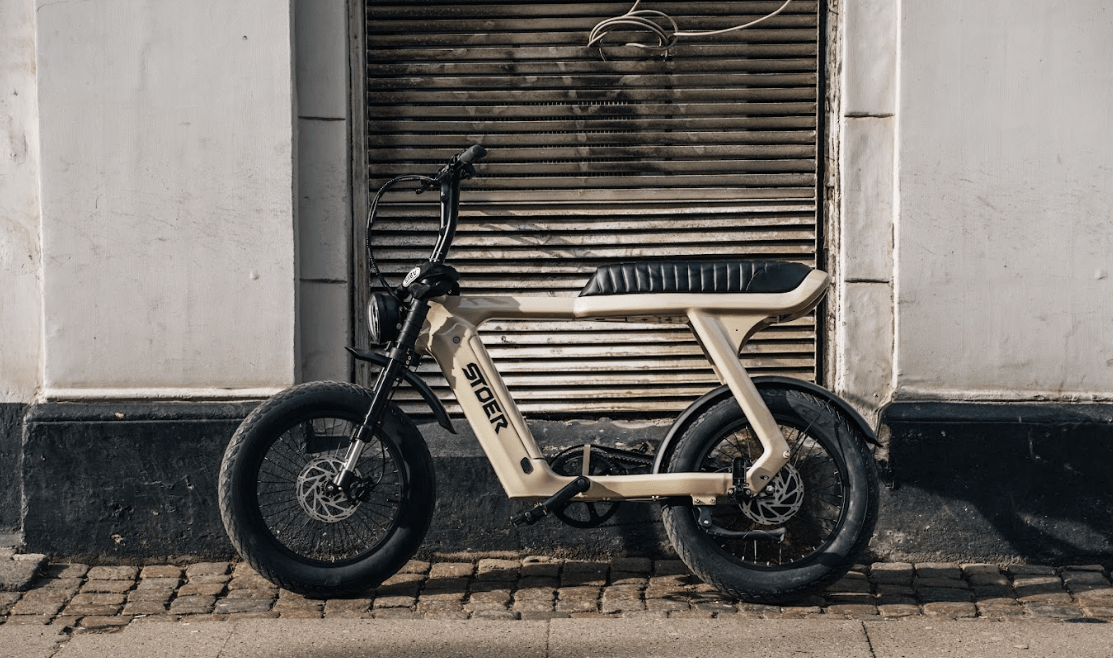
The CityX is an excellent example of a city bike that takes full advantage of the benefits of a belt drive.

Are there any disadvantages to a belt drive?
Despite the many advantages, there are some points to consider before choosing a belt-drive bike. The higher purchase price is often the first thing that stands out. Cycling with a belt drive are on average more expensive than comparable chain-drive models.
This higher cost comes from special frame requirements and more expensive components. A bicycle frame must in fact be specially designed for a belt drive, because the belt cannot be opened like a chain. Thus, the frame must have an opening to accommodate the closed belt.
"I was immediately excited about the idea of a belt, but the cost did hold me back at first," says Thomas. "In hindsight, it was well worth the investment, but it's something you have to think about carefully beforehand."
Another disadvantage is the more limited availability of replacement parts. Although growing in popularity, belt drive components are not yet as widely available as chain parts. This can be a problem when cycling in remote areas.
Also, not all bicycle designs are suitable for a belt drive. For example, if you want a bike with many gears, a belt drive may impose limitations. Most belt drive systems work best with a gear hub or a limited number of derailleur gears.
Finally, in the event of extreme stress or failure, a belt drive can be less forgiving than a chain. Whereas a chain can often be repaired with a chain punch, a damaged belt usually requires complete replacement.
Want to know more about buying a fatbike? Then read our blog about what to look out for.
The future of quiet drive systems for bicycles
The development of quiet, low-maintenance drive systems such as the belt drive marks an important evolution in bicycle design. The demand for sustainable mobility solutions continues to grow, and belt drives play a crucial role in this.
As technology continues to evolve, we see belt drives becoming more accessible to a wider audience. The initial higher cost is gradually being offset by economies of scale and technological improvements. This makes this quiet, clean technology available to more cyclists.
"For us, the belt drive is not hype, but a logical step toward future-proof cycling," says Joeri of STOER Bikes. "It combines everything modern mobility needs: comfort, durability and simplicity."
At STOER Bikes we strongly believe in the future of belt drives. Our models are designed with durability, ease of use and riding comfort in mind. By choosing innovative technologies such as belt drives, we contribute to a quieter, cleaner cycling experience. Experience the difference yourself discover the power of belt drive on a STOER electric fatbike.