Learning to ride a cargo bike may sound exciting, but with the right approach, you'll be stepping out confidently within an hour. Whether you want to take your kids to school or carry groceries, an electric cargo bike makes life a lot easier. In this guide, I share practical tips that will help you learn to ride a cargo bike quickly and safely. From the first meters in an empty parking lot to navigating through heavy city traffic.
Free delivery in NL and BE
Tested best in the Netherlands & Belgium with 8.5 and 8.2 by Fietstest.nl, Het AD and HLN
Learning to ride a cargo bike: practical tips for beginners
You'll find this in the article
- Why cargo bike riding learning is different from regular cycling
- The first step: choose the right practice site
- Learning to ride a cargo bike: mastering the basics
- Making turns with a cargo bike
- Braking and coming to a stop
- Learning cargo bike riding with children in the box
- In traffic: what to watch out for
- Reversing and parking
- Learn common mistakes in cargo bike riding
- The benefits of an electric cargo bike
- Practical checklist for your first ride
- From beginner to experienced cargo bike rider
- Frequently asked questions about learning to ride a cargo bike
Why cargo bike riding learning is different from regular cycling
A cargo bike is longer and heavier than a normal bicycle. This requires a different riding style. The cargo box is in front of you, requiring you to look farther ahead than you are used to. You turn more wide in corners and need more space to maneuver. Fortunately, you get used to this faster than you think.
The center of gravity is different because of the load in front. With an empty cargo box, the bike feels lighter, but as soon as you carry children or stuff, you notice the weight. An electric cargo bike with pedal assistance makes this difference much smaller. The motor helps you accelerate, so you don't have to struggle with the weight.
Thomas of STOER Bikes explains: "Most beginners get used to riding within half an hour. The most important thing is to start quietly and not go straight into the busy downtown area. Practice in a quiet place first."
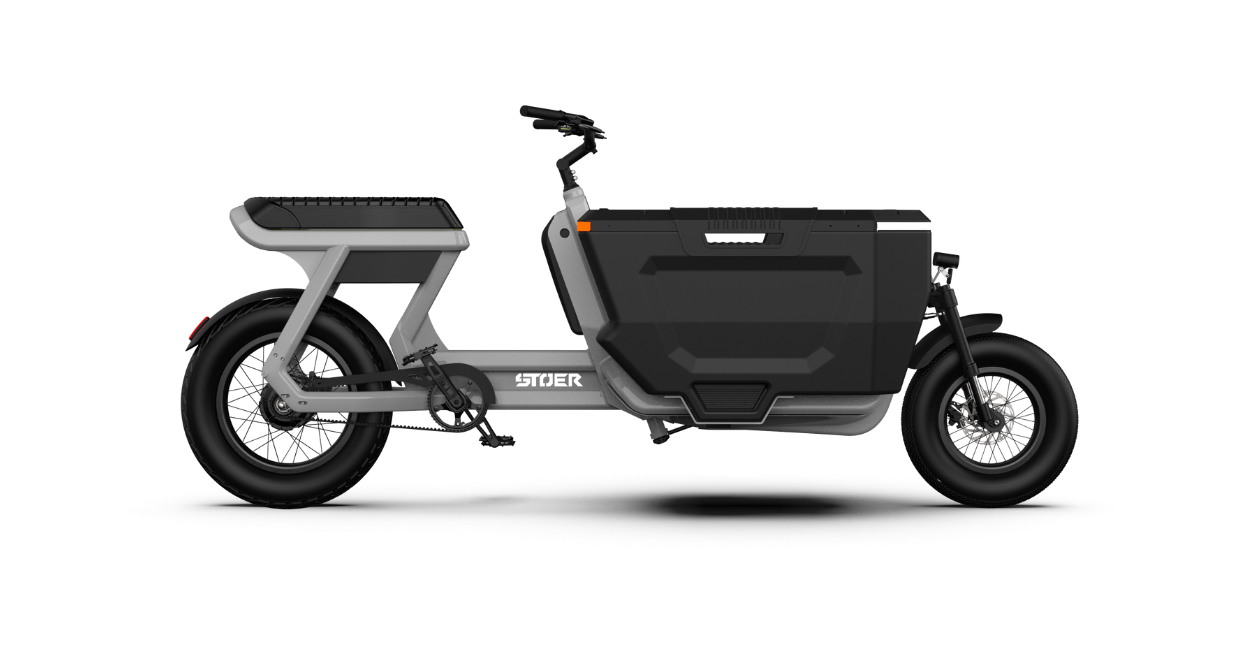
Want to learn more about electric cargo bikes? Then check out our STOER CargoX cargo bike.
The first step: choose the right practice site
Your first rides are best made in a quiet location. An empty parking lot of a supermarket (off-hours) or an industrial area on weekends are perfect places. Here you have space to practice without other road users.
What makes a good practice site?
Find a spot with enough room to make wide turns. A flat surface with no obstacles is nice for the first few meters. Avoid slopes until you have mastered basic riding. Make sure there are no parked cars or bollards in the way.
Start with straight sections and slowly add turns. First make wide left and right turns. Only then practice sharper turns. This is how you build your confidence step by step.
Want to try out the STOER CargoX first? Then schedule a test drive at a dealer near you.
Learning to ride a cargo bike: mastering the basics
When getting on, first set the parking brake. This prevents the cargo bike from rolling away as you get on. Sit on the saddle, place your feet on the pedals and then release the brake. This is especially true for three-wheeled cargo bikes with double stands.
How do you pull up properly?
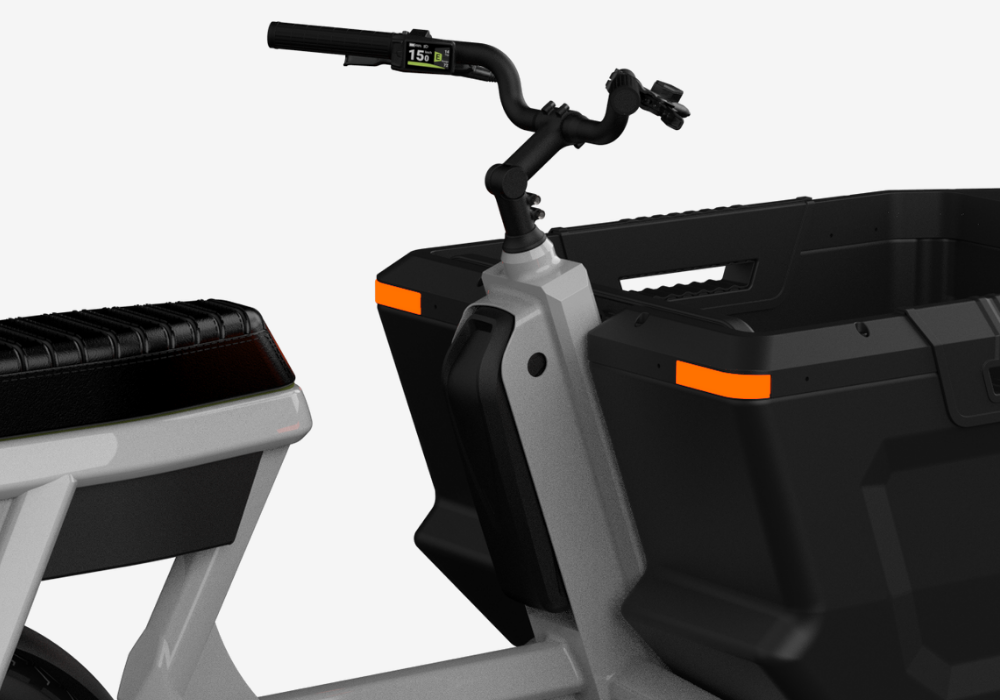
With an electric cargo bike, you switch on the motor first. Choose a low assist setting for the first few meters. Pedal slowly and let the motor do the heavy lifting. You don't have to push hard on the pedals. The STOER CargoX has an automatic shifting system with two gears. This means you don't have to think about shifting gears and can fully focus on the road.
Hold your handlebars firmly, but not convulsively. A relaxed grip gives you more control. Don't look at the bucket, but at where you want to go. You automatically steer in the right direction when you look ahead.
Curious about the technical specifications? Read more about the CargoX electric cargo bike.
Making turns with a cargo bike
Cornering is the part most beginners have to get used to. Because of the length of the cargo bike, you make wider turns than on a regular bike. Count on a turning radius twice as large. This means you have to start steering earlier.
Two-wheeler versus tricycle
On a two-wheeled cargo bike, you lean into the curve, just like on a normal bicycle. On a three-wheeled cargo bike, you stay upright. Do not lean your body into the corner, as you will feel the bike wobble. If necessary, release your outside hand from the handlebars during sharp turns for a smoother motion.
Always reduce your speed before a turn. Taking a turn too fast feels unstable, especially with children in the box. Take your time and ride slowly through the turn. After a few times, this will feel completely natural.
The thick tires of the STOER CargoX provide extra stability when cornering. They do not get stuck in streetcar rails and provide grip on various surfaces.
Braking and coming to a stop
A cargo bike is heavier than a normal bike, so your braking distance is longer. Start braking on time and use both brakes at the same time. Hydraulic disc brakes, like the Tektro brakes on the STOER cargo bikes, give a lot of braking power with little hand force.
Standing still with a tricycle
A big advantage of a three-wheel cargo bike is that you just stay put without having to get off. At a stoplight, you simply put your foot down or use the parking brake. This makes traffic a lot more relaxed, especially if you have children in the cargo box.
Practice braking at your practice spot. Brake from different speeds and feel how the cargo bike reacts. That way you will know exactly how much distance you need to come to a stop. This will give you confidence in real traffic.
Also check out our blog on safety and maintenance for more tips.
Learning cargo bike riding with children in the box
Only when you are confident driving without a load, start practicing with children. Start with a short drive in a quiet neighborhood. That way both you and your children will get used to the new means of transportation.
Safety rules for children
Always secure children with the three-point seat belts. The STOER CargoX has two sturdy safety belts that meet European standards. High sidewalls protect children from bumps and prevent them from sticking their arms outside the cargo box.
Explain the rules before you leave. Children should stay seated while driving and not get up unexpectedly. Make it a fun ritual: fasten the belts together and then leave. According to Kinderveiligheid.nl, a bakfiets is suitable for transporting 1 to 4 children up to about 7 years of age.
Want to carry a Maxi-Cosi for your baby? The STOER CargoX has an optional Maxi-Cosi adapter available.
In traffic: what to watch out for
Once you feel comfortable, it's time for the real thing. Traffic can be heavy, but with a few points of attention, you'll cycle safely through the city.
Visibility is everything
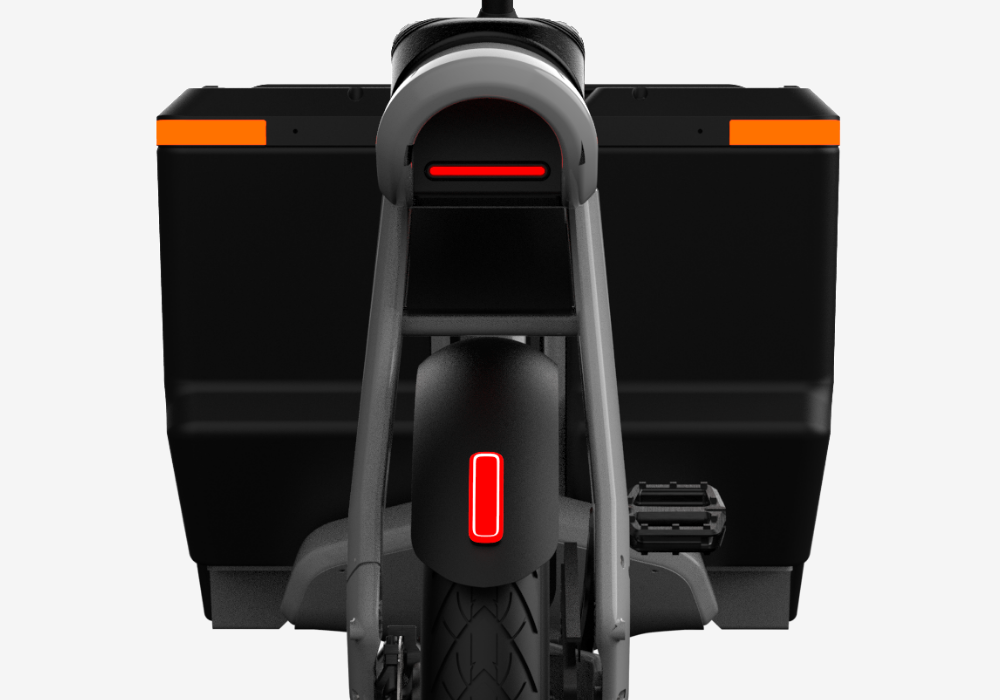
A cargo bike stands out because of its size, but extra visibility is never wrong. The STOER CargoX has integrated LED lighting with daytime running lights and turn signals. Just like a car, the turn signals clearly indicate where you are going. This makes your intentions clear to other road users.
According to the ANWB there are no specific legal rules for transportation in a cargo bike. As a guideline, use the requirements that apply to a regular bicycle. A cargo bike up to 1 meter wide is considered a normal bicycle and may ride on the bike path.
Space estimation
The bucket in front of you makes you wider than on a normal bicycle. Be aware of this when passing bollards, narrow passages and parked cars. The CargoX has a width of 70 centimeters, well within the bike lane standard of 1 meter. Still, it's smart to keep extra room.
"We have been riding a Stoer bicycle for a year now without any problems. Even the battery capacity has not deteriorated. And when you then see other brands where after a year the rust marks are visible I am glad I spent a little more and now have a bike made entirely of aluminum. And this one stays really neat!!!"

What are the main conclusions about the weight difference between drive systems?

"Purchased a STOER Bike last year after trying several fatbikes. STOER is by far the best! Still very much enjoy my purchase. In addition, the service is top notch!"

"The bike is perfect for people with long legs. Sitting comfort is perfect for long distances."

Reversing and parking
Riding a cargo bike in reverse takes practice. The steering direction is the opposite of what you intuitively expect. If you steer to the left, the rear end goes to the right. Practice this in a quiet place before you need it in real life.
Parking without stress
Find a parking spot where you have plenty of room to get on. The CargoX's double stand ensures stable parking, even on uneven surfaces. Always set the parking brake before removing children from the cargo box.
Parking on the sidewalk is allowed, as long as you do not obstruct pedestrians. Choose a spot where your bike will not be in the way. On busy shopping streets, a bike rack or special cargo bike parking area is ideal.
View the complete assortment on our web shop.
Learn common mistakes in cargo bike riding
Learning from mistakes is part of the game. Here are the most common beginner mistakes and how to avoid them.
Wanting too fast
Most beginners want too much too soon. They immediately step out onto the busy street or immediately take the children with them. Give yourself time to get used to it. Half an hour of practice in an empty parking lot will save you stress in traffic.
Staring at the bin
It's tempting to look at the bin, especially if that's where your children are. But just like driving a car, you have to look ahead. You steer where you look, so focus your gaze on the road ahead.
Underestimating the braking distance
A full cargo bike has a longer braking distance. Keep more distance than you are used to and start braking earlier. After a few rides, you will naturally get this feeling.
Too little maintenance
A cargo bike wears out faster than a regular bike because of its higher weight. Have the bike checked at least once a year. The belt drive on STOER cargo bikes is low maintenance, but check tire pressure and brakes regularly.
The benefits of an electric cargo bike
An electric cargo bike makes learning a lot easier. The motor helps with acceleration and keeps your speed constant, even with a full cargo bike. You don't have to struggle with the weight and arrive at your destination relaxed.
Why choose the STOER CargoX?
The CargoX combines power with ease. The Bafang motor with 92Nm of torque pulls effortlessly, even with four children in the box. The 960Wh battery gives you a range of 60 to 100 kilometers, depending on your riding style and load.
The two-speed automatic shifting system provides a smooth driving experience. You don't have to think about shifting gears. The motor adapts to your pedaling effort and conditions. This makes cargo bike riding learning a lot easier.
View the STOER CargoX and discover all the specifications.
Practical checklist for your first ride
Before you leave, run through this checklist. That way you can be sure everything is in order.
- Check tire pressure. Soft tires make steering harder.
- Test the brakes. Both brakes should work properly.
- Fully charge the battery. A dead battery halfway through a ride is annoying.
- Adjust the saddle to the correct height. You should be able to reach the ground with your feet.
- Check the lighting. Especially in the winter months, this is important.
- Have seat belts ready if you are bringing children.
Have questions about maintenance? Please contact contact on with our team.
From beginner to experienced cargo bike rider
After a few weeks, riding a cargo bike feels as normal as riding a regular bike. You automatically make the right judgment when cornering and brake at the right moment. The cargo bike becomes part of your daily routine.
Many parents are discovering that the cargo bike changes their lives. No more hassle with car seats, no more searching for parking spots. You get on, put the kids in the cargo box and ride to school. On the way, you enjoy the fresh air and arrive relaxed.
Joeri of STOER Bikes: "We hear it regularly from customers. They were skeptical at first, but after a week they don't want to go back to the car. The cargo bike gives freedom and flexibility you didn't expect."
Want more inspiration? Check out the STOER Bikes blog for stories from other cargo bike riders.
Frequently asked questions about learning to ride a cargo bike
How long does it take to learn cargo bike riding?
Most people feel comfortable on a cargo bike after 30 minutes to an hour. You learn basic riding quickly, but for complex traffic you need a little more practice. After a week of daily use, it feels completely natural.
Is a three-wheeled cargo bike easier than a two-wheeled one?
A tricycle is more stable at low speeds and standing still. You don't have to dismount at stoplights. A tricycle is more maneuverable and lighter. For beginners with children, a tricycle is often the safest choice.
Can I ride a cargo bike on the bike path?
Yes, a cargo bike up to 1 meter wide is allowed on the bike path. The STOER CargoX is 70 centimeters wide and falls well within this standard. For wider cargo bikes, you may also use the roadway.
From what age are children allowed in the cargo bike?
With a suitable infant car seat or Maxi-Cosi, you can take babies from about 3 months of age. Without an additional seat, children are suitable from about 9 months, when they can sit independently.
How heavy can the load in a cargo bike be?
The STOER CargoX has a maximum load capacity of 150 kilograms. This is more than enough for four children or a hefty load of groceries. Keep in mind the weight when braking and accelerating.
Is a helmet mandatory in the cargo bike?
No, a bicycle helmet is not legally required in the Netherlands, not even for children in cargo bikes. Some parents do opt for it, especially in heavy traffic. The high sides of the cargo box already provide protection in the event of a fall.


