For owners of a electric fatbike good security is a must. These valuable bikes are popular with thieves because of their precious components and striking appearance. The best locks for an electric fatbike combine high security ratings, ease of use and a layered security strategy. Choose a combination of a sturdy shackle lock as primary security, complemented by a robust chain lock and possibly advanced electronic solutions such as GPS tracking for optimal protection.
Free delivery in NL and BE
Tested best in the Netherlands & Belgium with 8.5 and 8.2 by Fietstest.nl, Het AD and HLN
Which locks are best for an electric fatbike?
You can find this in the article:
- Why is a good lock essential for your electric fatbike?
- What are the different types of locks for an electric fatbike?
- How do advanced anti-theft solutions such as GPS and PIN code locks work?
- Which combination of locks offers the best protection?
- What are the best practices for safely storing your electric fatbike?
- What are the most important considerations when choosing a lock for your electric fatbike?
- Frequently Asked Questions
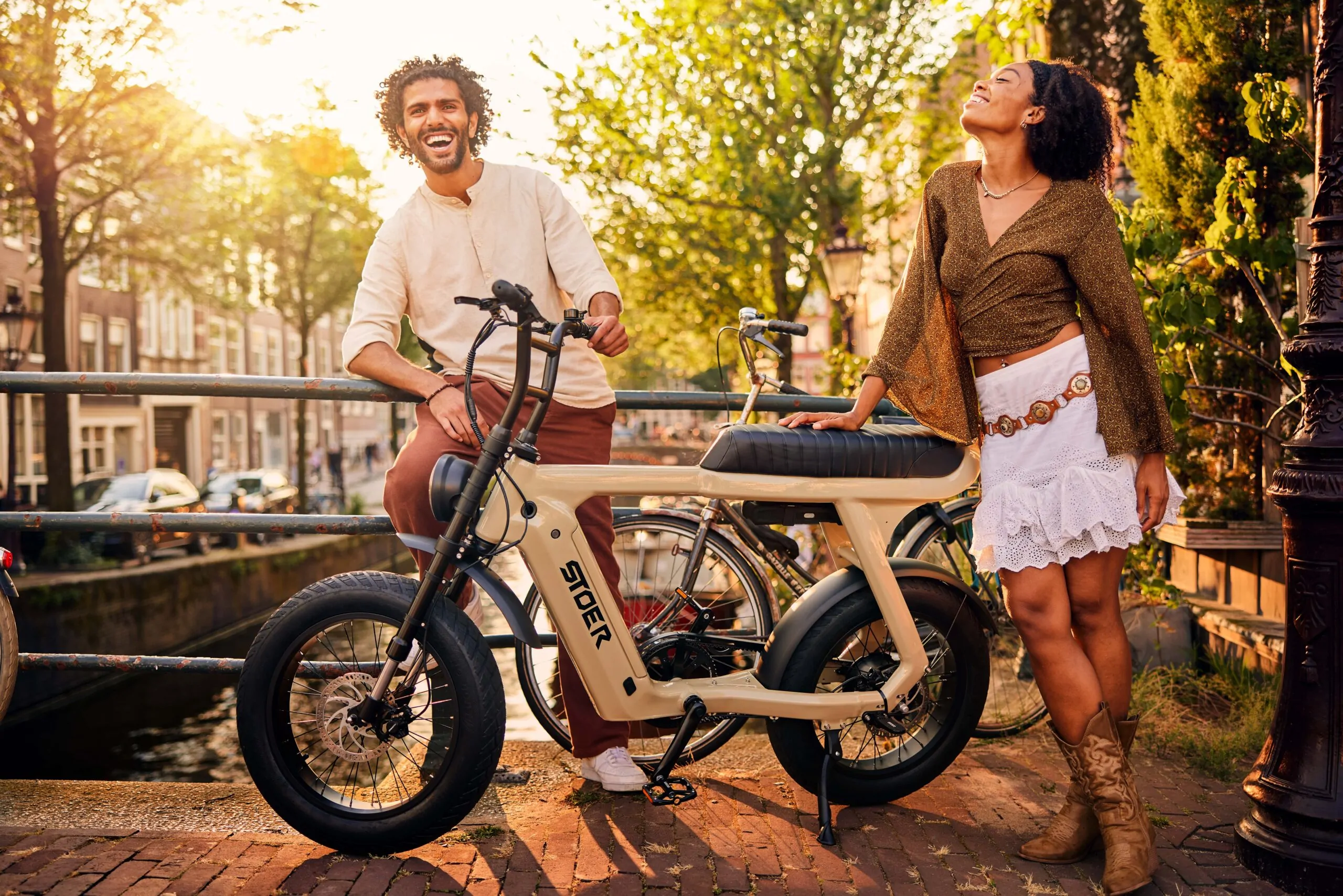
Why is a good lock essential for your electric fatbike?
"Unfortunately, I see it happen too often," Thomas explains. "Someone buys a beautiful electric fatbike of a few thousand euros and thinks a simple lock cable is enough. Within a week, their new acquisition is gone."
A good lock is vital to your electric fatbike because these bikes are particularly attractive to thieves. With their striking appearance, expensive electrical components and high market value, they are a popular target. An electric fatbike represents a hefty investment that can literally go up in smoke without adequate security.
Thomas emphasizes, "Especially those models with belt drive are of interest to thieves. They know that this technology is expensive and that these bikes often belong to people who are willing to invest heavily in quality."
Moreover, electric fatbikes contain valuable components such as the battery, motor and electronics that also represent a lot of value separately from the bike. So a good lock not only protects your bike, but also your investment in sustainable mobility.
What are the different types of locks for an electric fatbike?
Several lock types are available for an electric fatbike, each with its own strengths and weaknesses. Thomas has tested them all and shares his experiences.
Chain locks are a good basis, according to Thomas: "I myself always use a chain lock as part of my security strategy. They are flexible, so you can use your fatbike attach to almost anything. Just be sure to choose a thick chain - at least 9mm - or you'll be through in no time."
U-locks are Thomas' absolute favorite for head security: "A good shackle lock is truly uncrackable if you choose the right brand. They fit perfectly around the wide wheels of a fatbike and are so sturdy that even the most experienced thief will be long on them."
Folding locks finds Thomas useful for everyday use: "They are compact and easy to carry, but I don't trust them as the only protection for an expensive electric fatbike. They are more suitable as a supplement."
Ring locks uses Thomas especially for short stops: "Super convenient if you want to get into the store quickly. Within 2 seconds your rear wheel is locked. But be aware that your bike can still be carried away."
How do advanced anti-theft solutions such as GPS and PIN code locks work?
"Technology has really become a gamechanger in the fight against bicycle theft," Thomas says enthusiastically. "I myself have a GPS tracker in my fatbike and that really gives peace of mind."
GPS tracking systems are a smart investment, according to Thomas: "When my neighbor lost his e-bike, we had it back within 4 hours thanks to his GPS tracker. The police could see exactly where the bike was and picked it up immediately."
Pin code locks Thomas finds it especially convenient because you can't lose a key: "I'm one of those people who constantly lose my keys. With a PIN code lock you don't have that problem. Some can even be linked to your smartphone."
Thomas' tip for the future: "The latest systems combine everything - GPS, alarm, smartphone integration. It costs a little more, but for an expensive fatbike with belt drive, it's really worth the investment."
"Finally a fatbike you can ride without having your knees next to your ears."

"The bike is perfect for people with long legs. Sitting comfort is perfect for long distances."

"We have been riding a Stoer bicycle for a year now without any problems. Even the battery capacity has not deteriorated. And when you then see other brands where after a year the rust marks are visible I am glad I spent a little more and now have a bike made entirely of aluminum. And this one stays really neat!!!"

"Purchased a STOER Bike last year after trying several fatbikes. STOER is by far the best! Still very much enjoy my purchase. In addition, the service is top notch!"

Which combination of locks offers the best protection?
"I see a lot of people who think one good lock is enough," Thomas explains. "But you really get the best security by combining several locks. Thieves usually only carry one type of tool."
Thomas' proven strategy consists of:
- A high-quality shackle lock as a base - "I always attach this around my frame and rear wheel to a sturdy object. Choose at least ART-3 rating."
- A sturdy chain lock as a backup - "With this I additionally secure my front wheel. Now both wheels and the frame are secured."
- A ring lock for convenience - "For short stops, this is ideal. Just a quick trip into the supermarket without the hassle."
- GPS tracking as additional security - "In case something does happen, I can find my bike again."
Thomas emphasizes, "Choose different brands for your locks. A thief prepared for one brand often does not have the right tools for the other brand."
What are the best practices for safely storing your electric fatbike?
"A good lock is only half the story," Thomas explains. "Where and how you put your fatbike is just as important."
Thomas' golden rules for safe stalling:
- "Always choose a busy, well-lit spot. Thieves prefer to work in the shade."
- "Attach your bike to something really sturdy. I once saw someone attach his bike to a plastic pole - that obviously doesn't work."
- "Vary your parking spots. If you're in the same spot every day, it stands out."
"At home, I always store my fatbike inside," Thomas explains. "A shed or garage is really the safest. And don't forget to disconnect your battery if you leave it for a long time - that's the most expensive part."

What are the most important considerations when choosing a lock for your electric fatbike?
"People who come to me for advice often make the same mistake," Thomas explains. "They only look at the price or only at how solid a lock looks. But there's a lot more to it."
Thomas' checklist when choosing locks:
Security level first - "For a valuable electric fatbike, you want at least ART-3 or Sold Secure Gold. That's not a luxury, that's a necessity."
Ease of use is crucial - "The best lock doesn't help if it's so heavy that you never take it with you. Too often I see people with a 5-pound lock who end up leaving it at home."
Check Compatibility - "Not every lock fits the wide tires of a fatbike. Especially with belt drive models, you have to be careful that the lock fits snugly around the frame."
Thomas' final advice: "Think of good locks as insurance. You hope never to need them, but when the time comes, you're glad you invested in them. For me, it's a no-brainer after buying a premium electric fatbike."
Frequently Asked Questions:
How often should I replace my bicycle locks?
Bicycle locks typically have a lifespan of 5-7 years with normal use, but this can vary depending on weather conditions and intensity of use. Replace your lock as soon as you see wear on the locking mechanism, rust that cannot be removed, or when the lock begins to work more laboriously. For electronic locks with GPS functions, battery life or outdated technology may be a reason to replace earlier.
What should I do if my electric fatbike is stolen despite my locks?
Report it to the police immediately with as many details as possible (frame number, unique features, photos). Also report the theft to your insurance company. If you have a GPS tracker installed, share this location information with the police but do not go after your bike yourself. Spread information about your stolen bike through social media and websites such as bike theft registry. Regularly check online marketplaces where stolen bikes may be offered for sale.
What insurance is best for an electric fatbike with belt drive?
Choose specific e-bike insurance that explicitly provides coverage for high-value electric bikes. Pay attention to policy conditions around theft prevention (mandatory locks) and valuation in case of damage or theft. For belt drive models, it is important that the insurance also covers technical failures. Insurers such as ENRA and ANWB offer special packages for premium e-bikes with a higher value, where the higher premium outweighs the comprehensive coverage.
How do I secure my electric fatbike when I go on vacation?
For extended absences, a locked indoor space (shed or garage) with extra security is essential. Use multiple heavy-duty locks, even indoors. Consider installing a ground anchor to which you can attach the bike. Remove the battery and take it inside. Activate all electronic security systems and set motion alarms. If you don't have secure storage, consider a bike shed with 24-hour surveillance or ask a trusted person to check on it regularly.
How do I protect the detachable electrical components of my fatbike?
Always take valuable components such as the battery, display and any accessories with you when you leave your bike for an extended period of time. Invest in special anti-theft mounts for your battery that replace standard fasteners. Some manufacturers offer additional security kits specifically for their models. Mark all detachable parts with unique identification numbers. For added security, you can also hide a small GPS tracker in one of the components in addition to the primary tracker on the bike.
What are the most common mistakes when securing an electric fatbike?
The most common mistakes include: using only one type of lock, securing only the frame without securing the wheels, securing the bicycle to easily removable objects such as thin fences or road signs, resting locks on the ground where they are easier to force, and regularly parking in the same spot according to a predictable pattern. Also, locks are often attached too loosely, making it easier for thieves to use breaking tools.
How do I maintain my bicycle locks so they continue to function optimally?
Clean your locks regularly with a dry cloth and remove any dirt or sand from the mechanism. Use a specific lock spray or dry lubricant (not WD-40 or oil that attracts dirt) on the key mechanism and moving parts. Protect your locks from extreme weather conditions and keep them dry whenever possible. Regularly test that all locks are still working smoothly and check for rust. With electronic locks, it is important to replace batteries and perform software updates in a timely manner.