An electric cargo bike as a company vehicle offers entrepreneurs substantial tax advantages. From VAT deductions to investment allowances and special environmental subsidies: the government makes it attractive to switch to sustainable transport. In this blog you will read exactly how the VAT rules work, how to write off an electric cargo bike and what subsidies are available. So you know exactly what you can save.
Free delivery in NL and BE
Tested best in the Netherlands & Belgium with 8.5 and 8.2 by Fietstest.nl, Het AD and HLN
Electric cargo bike as a company car: VAT and depreciation
You'll find this in the article
Why an electric cargo bike as a company vehicle?
More and more business owners are choosing an electric cargo bike as their company vehicle. Think of florists, caterers, home care workers and delivery services. The advantages are obvious: you drive through heavy city traffic, park for free everywhere and always arrive on time. All while having no fuel costs.
Fiscally, an electric cargo bike is often more advantageous than a van or car. The additional tax liability is lower, depreciation is favorable and you are eligible for additional subsidies. Especially if you also use the cargo bike for business deliveries or customer visits, it pays to check out the tax options.
"We see more and more business owners trading in their van for a CargoX," says Joeri of STOER Bikes. "Especially in the city, it's a smart choice. No parking fines, no traffic jams and you get to your customers faster."
Looking for the best electric cargo bike for business use? Then check out our blog about the best electric cargo bike 2026: STOER CargoX with €720 free accessories.
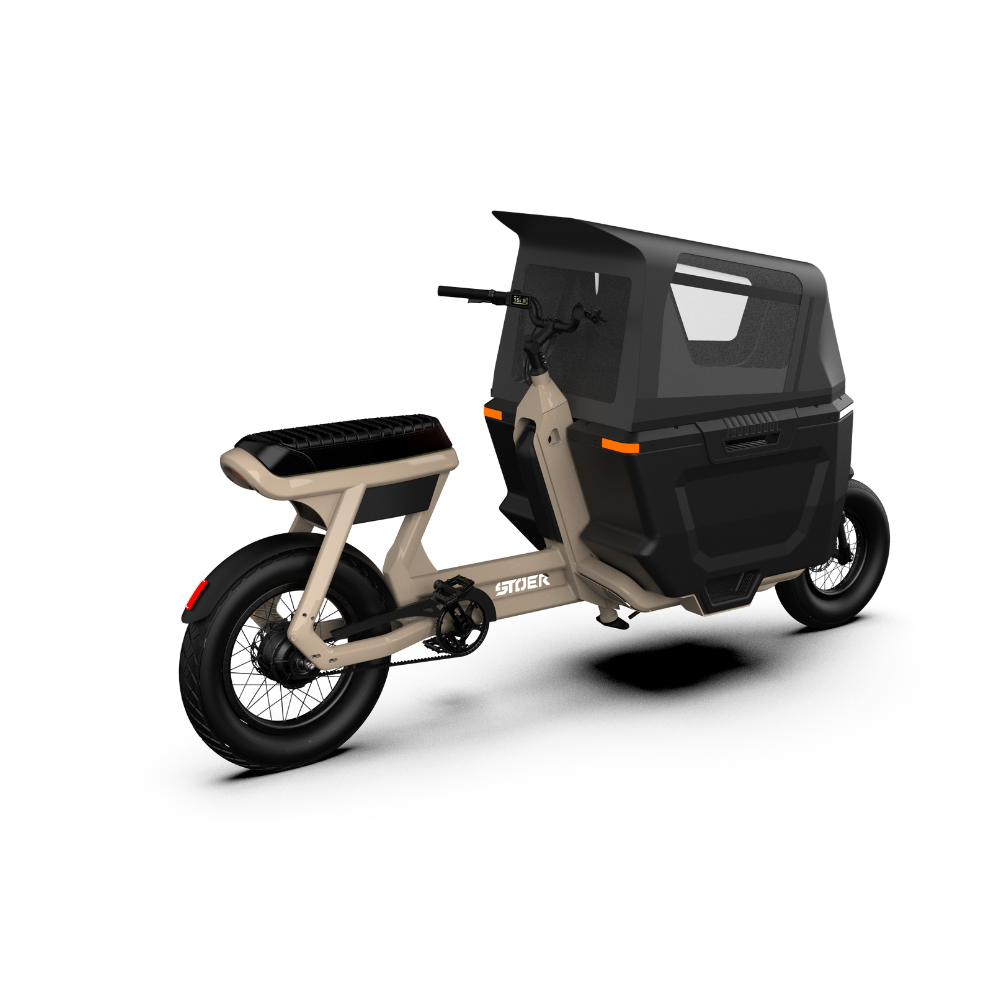
Electric cargo bike as a company car: deduct VAT
Buying an electric cargo bike as a company vehicle? Then you can deduct the VAT. At least, for the part you use the cargo bike for business purposes. This works just like other business assets.
How does VAT deduction work for entrepreneurs?
As a VAT taxpayer, you can reclaim VAT on business purchases through your VAT return. For an electric cargo bike of €6,495 including VAT, that's €1,127 of VAT you can reclaim. That makes a big difference.
Do you only use the cargo bike for business? Then reclaim 100% of the VAT. Do you also use it privately, for example to take your children to school? Then you have to calculate the business part. So for 80% business use, you reclaim 80% of the VAT.
VAT rules for employers
Do you provide the electric cargo bike to an employee for commuting? Then different rules apply. The VAT deduction is then limited to a maximum of €130. This applies to bikes that cost more than €749 including VAT.
For the entrepreneur who uses the cargo bike himself, this restriction does not apply. You may then deduct the full VAT, minus the portion for private use.
Want to learn more about the rules for business bike use? Read our blog on special rules for cargo bikes in traffic.
Depreciation of an electric cargo bike
Are you buying an electric cargo bike for your business? Then you write off the purchase cost over several years. This means that each year you enter a portion of the cost as a business expense, reducing your taxable profit.
Amortization period: 5 years
The standard depreciation period for an electric cargo bike is 5 years. So you write off a maximum of 20% of the purchase price each year. For a €6,495 cargo bike, that's €1,299 per year in depreciation.
Imagine: you have a profit of €50,000 per year. Depreciation of €1,299 reduces your taxable profit to €48,701. Depending on your tax rate, this will save you a few hundred euros in taxes each year.
Determining residual value
When depreciating, you take into account the residual value. This is the estimated value of the cargo bike after the depreciation period. Many business owners calculate a residual value of 10-20% of the purchase price. This leaves some value on the balance sheet after 5 years.
Accelerated depreciation with Vamil
Electric cargo bikes are on the government's Environmental List. That means you can take advantage of the Vamil scheme: Random Depreciation of Environmental Investments. This allows you to write off up to 75% of the investment at a time you choose.
This is useful if you make a lot of profit in a year. You then write off a larger portion of the cargo bike, reducing your taxable profit considerably. You write off the remaining 25% regularly over subsequent years.
Want to learn more about the benefits of an electric cargo bike? Check out our blog about Why you should or should not buy an electric cargo bike.
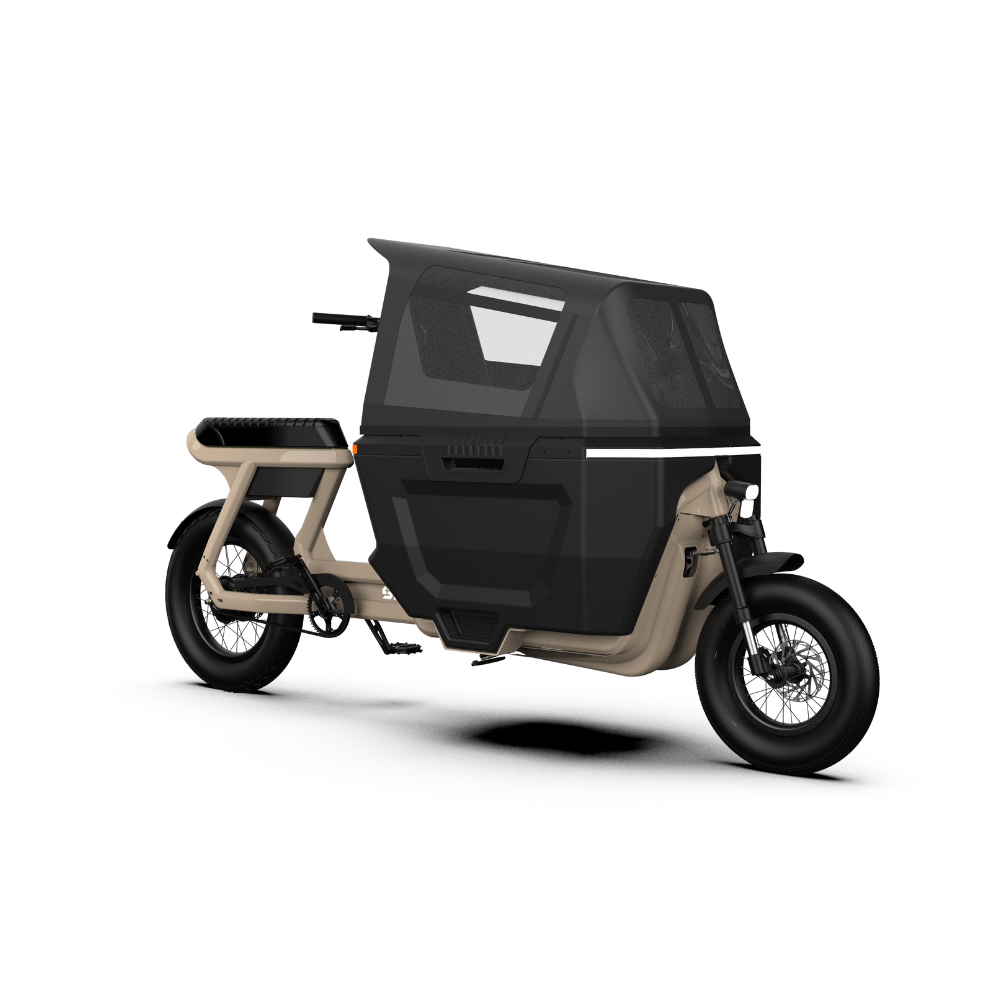
Small-scale investment deduction (KIA)
As an entrepreneur, you can take advantage of the small-scale investment deduction, also known as KIA. This is an additional deduction on top of the normal depreciation. The KIA further reduces your taxable profit.
Prerequisites for KIA
To qualify for KIA, you must meet a few conditions. The asset must cost at least €450 excluding VAT. And your total investments in that year must be between €2,900 and €387,580. With most electric cargo bikes, you easily meet these requirements.
How much KIA do you get?
The amount of the KIA depends on your total investment amount. For investments up to about €70,000, you get a 28% deduction. For a €6,495 electric cargo bike, that's an additional €1,819 deduction from your profit.
Note that the KIA is calculated on the investment amount excluding VAT. And if you also use the MIA (environmental investment allowance), you must deduct the MIA amount first before calculating the KIA.
Environmental investment allowance (MIA) for electric cargo bikes
The government encourages sustainable investments with the MIA: Environmental Investment Allowance. Electric cargo bikes are on the Environmental List and are therefore eligible for additional tax breaks.
MIA percentages in 2025 and 2026
Electric cargo bikes are subject to an MIA deduction of 36% (code A 3119) in 2025 and 2026. You may deduct this percentage from your taxable profit, on top of the normal depreciation and the KIA. Do you have a cargo bike with integrated solar panels? Then even a deduction of 45% (code F 3120) applies.
Important: The MIA is calculated on 90% of the investment amount. So for a €6,495 cargo bike, the MIA is: €6,495 x 90% x 36% = €2,104 additional deduction.
Conditions for MIA
To qualify for MIA, the electric cargo bike must meet a few conditions. The cargo bike must have an empty weight of at least 75 kg. Also, the cargo bike must be intended to transport goods or people. The STOER CargoX more than meets these requirements with a frame made of sturdy aluminum and a container of 100×70 cm.
You must report the investment to RVO (Rijksdienst voor Ondernemend Nederland) within 3 months of purchase. Do you not do this on time? Then you miss out on the full MIA deduction. So put this in your agenda right away when you buy an electric cargo bike.
"We have been riding a Stoer bicycle for a year now with no problems. Also to the battery capacity is not yet

What are the main conclusions about the weight difference between drive systems?

"Purchased a STOER Bike last year after trying several fatbikes. STOER is by far the best! Still very much enjoy my purchase. In addition, the service is top notch!"

"The bike is perfect for people with long legs. Sitting comfort is perfect for long distances."

Vamil: accelerated depreciation
In addition to the MIA, you can also take advantage of the Vamil scheme. Vamil stands for Random Depreciation of Environmental Investments. It allows you to decide when to depreciate up to 75% of the investment.
How does Vamil work?
Normally, you write off an electric cargo bike in 5 years: 20% each year. With Vamil, you may immediately write off 75% in the first year. The remaining 25% you write off regularly thereafter.
This is especially useful if you make a lot of profit in a given year. By accelerating depreciation, you significantly reduce your profits in that year. You then pay less tax. In later years, your depreciation is lower, so you pay more tax. But you will have had a liquidity and interest advantage.
Combining MIA and Vamil
The great thing is that you can combine MIA and Vamil. So you get both extra deduction (MIA) and the possibility of accelerated depreciation (Vamil). For electric cargo bikes the following applies: 36% MIA + 75% Vamil over 90% of the investment.
Check out business financing options in our blog on how expensive is an electric cargo bike.
Additional charge for the electric cargo bike
Do you also use the electric cargo bike as a company car privately? Then you have to deal with an additional taxable benefit. This is similar to the additional taxable benefit for a company car, but the percentages are much lower.
7% addition
The additional tax liability for a company bicycle is 7% of the recommended retail price including VAT. For a €6,495 electric cargo bike, that's €455 per year. This amount is added to your profit or income.
Suppose you fall in the tax rate of 37.07%. Then you pay about €169 extra tax per year on that €455 additional tax. That's €14 per month. Compare that to the additional tax liability of a van or lease car.
Additional taxes limit expense deduction
The additional taxable income limits the deduction of your bicycle expenses. Are your total bicycle costs (depreciation, maintenance, insurance) less than the addition? Then you have no net cost deduction. Are they higher? Then you may deduct the difference from your profit.
"The additional tax rate of 7% is very favorable," says Thomas of STOER Bikes. "With a €6,495 CargoX, you only pay an additional €14 tax each month. That's a fraction of what you pay for a van."
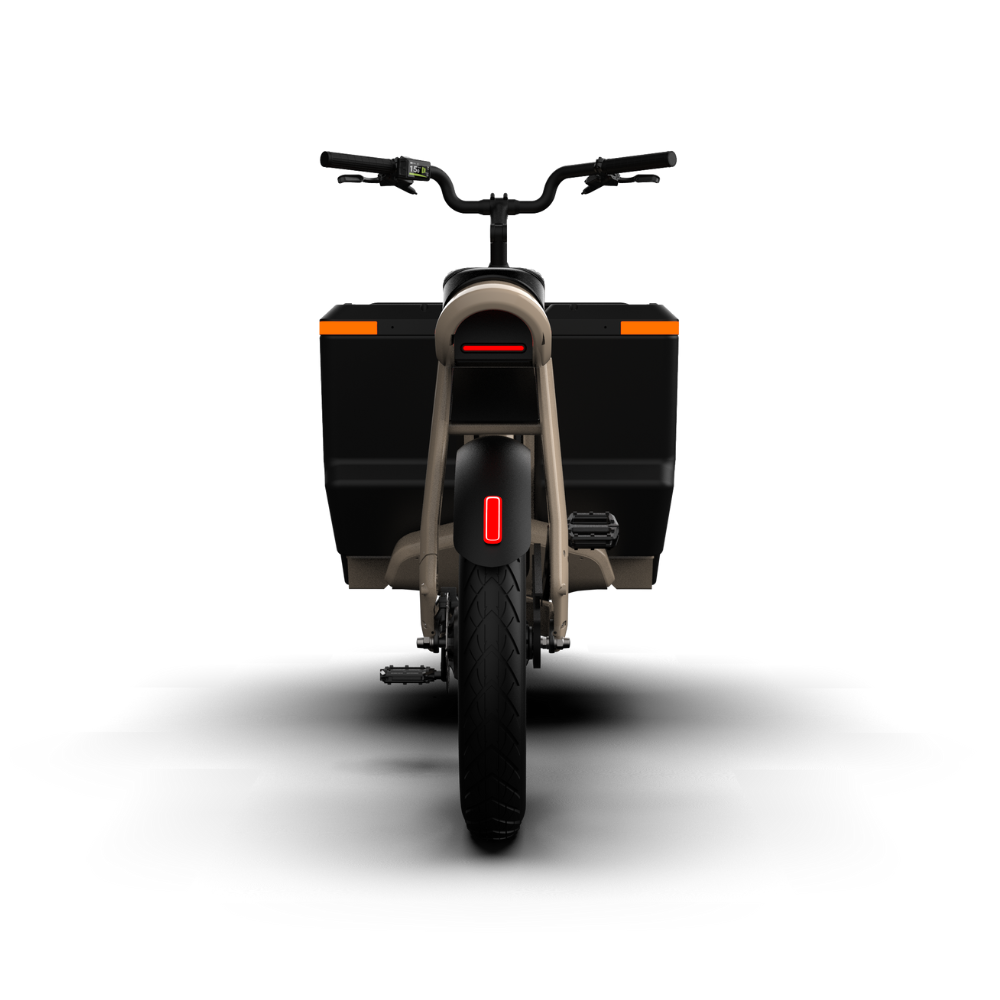
Calculation example: electric cargo bike as a company vehicle
Let's make the benefits concrete with a calculation example. You buy a €6,495 STOER CargoX including VAT for your flower store.
VAT benefit
The VAT on the purchase is €1,127. For 100% business use, reclaim this in full through your VAT return.
MIA benefit
The MIA deduction is 36% over 90% of €6,495 = €2,104. At a tax rate of 37.07%, this yields €780 in tax savings.
KIA benefit
The KIA is 28% on the remaining investment amount after MIA. (€6,495 - €2,104) x 28% = €1,230 additional deduction. This provides another €456 tax benefit.
Total benefit first year
In the first year you can save over €2,300 through VAT refund, MIA and KIA combined. The net investment thus drops from €6,495 to about €4,200. And that's not counting depreciation and possible Vamil.
View all of the CargoX's specifications at the STOER CargoX product page.
Electric cargo bike lease or buy?
You can buy an electric cargo bike as a company vehicle, but leasing is also an option. Both have advantages and disadvantages.
Benefits of buying
When you buy, you become an immediate owner. You can reclaim VAT, make use of MIA, Vamil and KIA, and depreciate the cargo bike. After the depreciation period, you have no more expenses, while you can use the cargo bike for years to come.
Advantages of leasing
With leasing, you don't have a large investment all at once. You pay a fixed monthly amount, which often includes maintenance. The lease installments are fully deductible as a business expense. This is useful if you want to preserve liquidity for other investments.
Note: With operating leases, the leasing company can apply the MIA and Vamil, not you. Please inquire about this in advance.
Subsidies for electric cargo bikes
In addition to tax schemes, there are also direct subsidies for electric cargo bikes. These vary by municipality and province.
Municipal grants
Many municipalities have subsidies for business owners who switch to electric transportation. Amsterdam, Rotterdam, Utrecht and other major cities offer schemes for purchasing electric cargo bikes. The amounts range from €500 to €2,000 per cargo bike.
Always check your municipality's website or contact the municipal business office. Grants often have a limited budget and are awarded on a first-come, first-served basis.
Provincial and national schemes
Provinces and the state also have subsidy schemes for sustainable transport. These focus mainly on companies with fleets of vehicles or logistics companies. For individual entrepreneurs, the tax schemes (MIA, Vamil, KIA) are often the most interesting.
Want to learn more about grant opportunities? Then check out our blog on subsidy opportunities for electric cargo bikes.
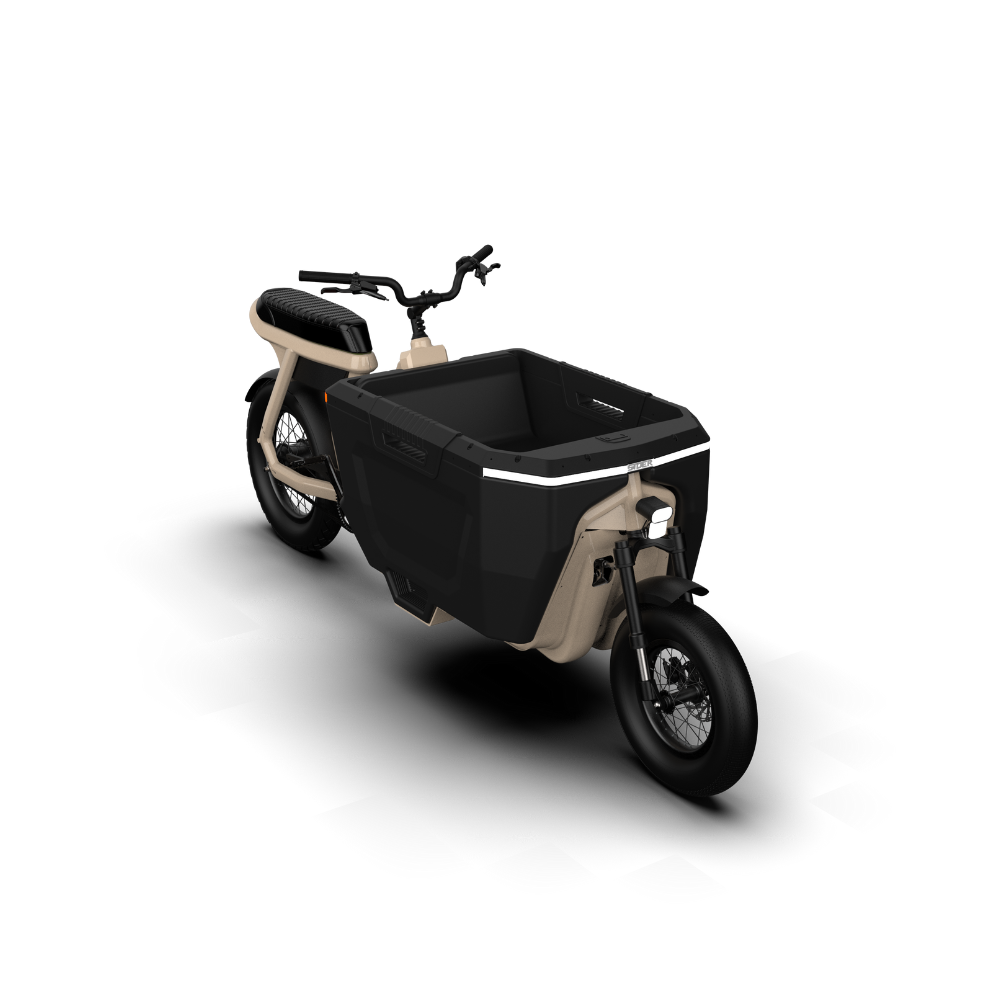
The STOER CargoX as a business commercial vehicle
The STOER CargoX is designed for intensive business use. With a load capacity of 150 kg and a spacious container of 100×70 cm, there is room for substantial loads. Think flowers, groceries, tools or catering.
The 960Wh battery offers a range of 60 to 100 km, depending on the load. That's enough for a full day of work delivering around town. The motor delivers 92Nm of torque, so you'll ride away smoothly even with a full charge.
For business users, the Gates CDX belt drive is a big plus. It requires no maintenance, so you don't spend time and money on lubrication or chain replacement. Ideal if the cargo bike needs to run every day.
The CargoX is CE certified and meets all European standards. This is important for insurance purposes and for MIA/Vamil applications. With an empty weight over 75 kg, you qualify for the full environmental subsidies.
Curious to see the CargoX in action? Schedule a test ride and experience for yourself how the cargo bike rides.
Administration and trip recording
To properly tax the electric cargo bike as a company vehicle, you need to keep track of a few things.
Proving business use
You must be able to prove that you use the cargo bike at least 10% on business. You do this with a trip registration form or a reasonable estimate. The Inland Revenue does not ask for this by default, but in case of an audit you must be able to substantiate it.
In practice, 10% business use is quickly reached. Do you drive to a customer or supplier twice a week? Then you're already well above 10%.
Keeping invoices and receipts
Keep the purchase invoice of the cargo bike and all invoices for maintenance, repairs and accessories. You will need these for the VAT return and MIA/Vamil application.
Remember to submit the MIA/Vamil notification to RVO within 3 months of purchase. Keep the receipt with your records.

Summary: tax advantages electric cargo bike
An electric cargo bike as a company vehicle offers entrepreneurs considerable benefits. Here are the key points in a row:
- VAT deduction: reclaim VAT (21%) for the business portion
- Depreciation: write off the cargo bike in 5 years (20% per year)
- KIA: 28% additional deduction for investments over €2,900
- MIA: 36% additional deduction for electric cargo bikes on the Environment List
- Vamil: 75% accelerated depreciation in the year you choose
- Addition: only 7% of the consumer price
- Report the investment to RFO within 3 months for MIA/Vamil
Do the math for your situation or ask your accountant for advice. Chances are that an electric cargo bike will be more fiscally advantageous than a car or van.
Frequently asked questions about electric cargo bike as a company vehicle
Can I deduct the VAT on an electric cargo bike?
Yes, as a VAT taxpayer, you may deduct VAT for the business portion of the use. For 100% business use, you reclaim the full VAT (21%). For mixed use, you calculate the business percentage.
How long do I depreciate an electric cargo bike?
The standard depreciation period is 5 years, or 20% per year. With the Vamil scheme, you may accelerate depreciation up to 75% in a year of your choice.
What is the additional charge for an electric cargo bike?
The additional tax is 7% of the recommended retail price including VAT. For a €6,495 cargo bike, that's €455 per year. This is added to your taxable income.
Is my electric cargo bike eligible for MIA?
Yes, if the cargo bike has an empty weight of at least 75 kg and is intended for business transportation of goods or people. The STOER CargoX meets these conditions. You get 36% MIA and 75% Vamil on 90% of the investment amount.
By what deadline should I apply for MIA/Vamil?
You must report the investment to RVO within 3 months of purchase. If you do not do this on time, your right to MIA and Vamil will expire.
Which is more advantageous: leasing or buying an electric cargo bike?
Buying is often more fiscally advantageous due to the combination of VAT deduction, MIA, Vamil and KIA. Leasing can be interesting if you want to maintain liquidity or want predictable monthly costs.
How much can I save with an electric cargo bike as a company vehicle?
For a €6,495 cargo bike, you can save over €2,300 in the first year through VAT refunds, MIA and KIA. This reduces the net investment to about €4,200.
Do I need to keep a trip log?
You must be able to prove that you use the cargo bike for business at least 10%. A comprehensive trip log is not required, but it is useful in case of an audit. A reasonable estimate based on your activities is usually sufficient.